By Michael Hartigan
Article appeared in the Wicked Local papers in May, 2015
There are hotels and then there are hotel destinations. Maybe you stay at one on your honeymoon
or you walk through one on vacation (but you're staying at the economy chain hotel down the
street). Maybe you just stumbled upon it online while booking your next trip but almost choked
on your keyboard when you saw the cost per night. However you know about it, there is a
resort/hotel out there that you'd visit without delay if money were no object.
With summer vacation season upon us, it can’t hurt to daydream about these dream destinations.
Castles, for example, have always been at the top of my list.
I was fortunate enough to get a small taste of medieval living (albeit with every modern luxury
possible) when I spent two nights at the 7,000 acre Banfi vineyard estate in Italy. At its center
soars Castello Poggio alle Mura, or Castello Banfi. The castle’s 8th century charm and whimsy
remain after intelligent renovation transformed it into a 14-room hotel of the most lavish sort.
The Tuscan countryside sprawls in every direction like a massive green patchwork quilt dotted
with ponds and forests.
But the castle itself is the temporary home to so few guests that it is impossible not to feel at least
some of the communal camaraderie that the 8th century inhabitants must have felt – minus the
plague, of course.
On my castle to-do list, however, remains Ashford Castle in Country Mayo, Ireland. It checks all
the boxes: a castle in the majestic Irish countryside, surrounded by historic and archaeological
spots with individually designed guestrooms, dripping with the comforts required for no one less
than royalty. Oh, and they have falconry. Yes, falconry. In the shadows of the ancient castle, you
can learn how to launch a bird of prey from your arm.
If castles aren’t your thing, perhaps Remote Island living is. I’ve had friends rave about over-
water huts in Bora Bora, French Polynesia, at places like the Intercontinental Bora Bora Resort.
Imagine waking up to the soft sound of water lapping against the side of a paddle as your
breakfast is delivered by outrigger canoe. As you sit to eat your breakfast, you look around at the
crystal blue surrounding you on all sides; the sky melting into the azure waters of a quiet lagoon.
The rooms, luxurious and opulent, wade offshore in a horseshoe, proudly beckoning to travelers
seeking the ultimate in relaxation and indulgence.
Not remote enough? Check out Explora, Rapa Nui, Easter Island. Five hours off the coast of
Chile, the luxurious facility is built with rounded architecture, mimicking the curves of the island
and emphasizing the already mystifying aura of Rapa Nui. The famous Easter Island statues may
be the impetus for most travelers’ trek to this secluded Pacific rock, but staying at Explora comes
with your choice of adventure or relaxation.
The top spot on my list of dream hotels gives me chills, literally. But that is a good thing atop the
world at the Ice Hotel in Jukkasjarvi, Sweden. This structure’s eponymous building material
transports its lucky patrons to a world far beyond anything we encounter in our daily hullabaloo.
It is the stuff of fantasy, myth and Nordic legend. The building is completely made of ice,
including your room, the furniture, the art – you name it, it’ll freeze your tongue if you lick it.
There are warm accommodations but what’s the point in that? If I’m traveling 200 km above the
Arctic Circle, I better sleep on a bed made of ice. And if you time your trip right, the shimmering
green and purple waves of Aurora Borealis (the Northern Lights) haunt the outline of the snow
palace. Ice Hotel is the ultimate in dream hotels because at the end of each season, it’s gone
forever.
These are just a few of my dream destinations and I encourage everyone to pull together their
own list. If nothing else, searching around for the world’s creative, unique lodgings can inspire
creative and unique travel ideas, and give us somewhere to aspire to.

Thursday, May 14, 2015


Thursday, March 12, 2015
A Starry Night at Amsterdam’s Van Gogh Museum
By Michael Hartigan
Article ran in Wicked Local papers in March, 2015
During the evening an artistic air wafts over Amsterdam’s museum-studded park Museumplein.
The magnificent Rijksmuseum, recently restored and renovated, is warehouse of historic
masterpieces, and the exterior’s sweeping grandeur, spotlighted from the surrounding gardens, is
a work of art in itself. Tourists and locals play and pose amongst the oversized, recognizable, “I
amsterdam” letters, which take on ethereal form from nighttime mood lighting. The entire scene
shimmers and distorts in an elongated reflecting pool. And at the far corner of the park, past the
gardens, café and outdoor art exhibits, the Van Gogh museum inhales the artistic air and
transports visitors to the world of a virtuoso.
Vincent Van Gogh had the rare ability to capture viewers with his paintings; leaving them
somewhere between genius and madness, flush with vivid colors, distinctive techniques and deep
emotion. Fittingly, his museum works from that same palette.
The Van Gogh Museum weaves the artist’s trademark individuality and layered emotions into its
exhibition space. And like many of Van Gogh’s paintings, a quick glance does not do the
museum justice. Luckily, the museum offers late hours until 10:00pm on Friday nights, complete
with cocktails, moody music and interactive activities. The result, much like a Van Gogh
painting, is a multidimensional and somewhat hazy experience that reveals the deeper stories
behind the artist and his works.
The building itself is not filled to the brim, as you might expect from a museum dedicated to one
person, and some famous pieces like The Starry Night are not located here. Regardless, the
museum houses the world’s largest collection of Van Gogh works, including well-known
masterpieces such as the vibrant Sunflowers and The Bedroom, and the colorful but mournful
Wheatfield with Crows, one of his last paintings.
Large portions of the works are grouped chronologically, while other sections focus on
comparing pieces and highlighting specific aspects of his work. The collection ranges from early
works to his final masterpieces, and also displays sketches and writings. Taken all at once, the
collection demonstrates his artistic evolution and personal devolution.
The Potato Eaters from 1885, for example, is a dark, intricately detailed scene where Van Gogh
plays with light and shadow. But by 1889, Undergrowth portrays Van Gogh’s trademark heavy
brush strokes and use of color; varying shades of green, yellow and blue are pulled from the
underbrush up the twisting trees, adding a fluid, wave-like motion to a dense forest landscape.
The contrast of Van Gogh’s own works is, in many instances, stark and shocking – bright colors
versus stormy landscapes, detailed sketches versus harsh brush strokes. The range of paintings
shows the range of Van Gogh’s skill, as well as his cutting-edge use of novel techniques, and
how his own emotions so vividly play out in color on a canvas stage.
The Van Gogh Museum tells the story of the artist’s tormented history through his artwork, and
also pays special attention to his influences. As a complement, they include paintings by
contemporaries and friends of Van Gogh, and in some cases written correspondences. In many
instances, works from friends like Emile Bernard and Paul Gauguin are placed in sequence next
to Van Gogh’s own interpretations. The same is done with the international cultures that
influenced him, from France to Japan. The result on many walls is a seamless transition that
explains, without words, a surprising array of inspirations.
Van Gogh’s Almond Blossom, for example, painted in 1890 as a gift for his newborn nephew,
displays very clear Japanese influences, with delicate, wispy branches set against a vivid color
scheme.
As an artist Van Gogh evolved, and true to form, his museum also has not been content to remain
static in its aesthetics. The main building opened in 1973 but renovations updated and
modernized the structure with a new exhibition wing in the late 1990s. Mobile apps, classes and
special events were developed for a more inclusive experience. A new glass entrance building is
slated to open in the summer of 2015.
So while his painting by the same name is brilliant and beautiful, spending an actual starry night
in Amsterdam is a much more fitting way to experience Vincent Van Gogh.
Article ran in Wicked Local papers in March, 2015
During the evening an artistic air wafts over Amsterdam’s museum-studded park Museumplein.
The magnificent Rijksmuseum, recently restored and renovated, is warehouse of historic
masterpieces, and the exterior’s sweeping grandeur, spotlighted from the surrounding gardens, is
a work of art in itself. Tourists and locals play and pose amongst the oversized, recognizable, “I
amsterdam” letters, which take on ethereal form from nighttime mood lighting. The entire scene
shimmers and distorts in an elongated reflecting pool. And at the far corner of the park, past the
gardens, café and outdoor art exhibits, the Van Gogh museum inhales the artistic air and
transports visitors to the world of a virtuoso.
Vincent Van Gogh had the rare ability to capture viewers with his paintings; leaving them
somewhere between genius and madness, flush with vivid colors, distinctive techniques and deep
emotion. Fittingly, his museum works from that same palette.
The Van Gogh Museum weaves the artist’s trademark individuality and layered emotions into its
exhibition space. And like many of Van Gogh’s paintings, a quick glance does not do the
museum justice. Luckily, the museum offers late hours until 10:00pm on Friday nights, complete
with cocktails, moody music and interactive activities. The result, much like a Van Gogh
painting, is a multidimensional and somewhat hazy experience that reveals the deeper stories
behind the artist and his works.
The building itself is not filled to the brim, as you might expect from a museum dedicated to one
person, and some famous pieces like The Starry Night are not located here. Regardless, the
museum houses the world’s largest collection of Van Gogh works, including well-known
masterpieces such as the vibrant Sunflowers and The Bedroom, and the colorful but mournful
Wheatfield with Crows, one of his last paintings.
Large portions of the works are grouped chronologically, while other sections focus on
comparing pieces and highlighting specific aspects of his work. The collection ranges from early
works to his final masterpieces, and also displays sketches and writings. Taken all at once, the
collection demonstrates his artistic evolution and personal devolution.
The Potato Eaters from 1885, for example, is a dark, intricately detailed scene where Van Gogh
plays with light and shadow. But by 1889, Undergrowth portrays Van Gogh’s trademark heavy
brush strokes and use of color; varying shades of green, yellow and blue are pulled from the
underbrush up the twisting trees, adding a fluid, wave-like motion to a dense forest landscape.
The contrast of Van Gogh’s own works is, in many instances, stark and shocking – bright colors
versus stormy landscapes, detailed sketches versus harsh brush strokes. The range of paintings
shows the range of Van Gogh’s skill, as well as his cutting-edge use of novel techniques, and
how his own emotions so vividly play out in color on a canvas stage.
The Van Gogh Museum tells the story of the artist’s tormented history through his artwork, and
also pays special attention to his influences. As a complement, they include paintings by
contemporaries and friends of Van Gogh, and in some cases written correspondences. In many
instances, works from friends like Emile Bernard and Paul Gauguin are placed in sequence next
to Van Gogh’s own interpretations. The same is done with the international cultures that
influenced him, from France to Japan. The result on many walls is a seamless transition that
explains, without words, a surprising array of inspirations.
Van Gogh’s Almond Blossom, for example, painted in 1890 as a gift for his newborn nephew,
displays very clear Japanese influences, with delicate, wispy branches set against a vivid color
scheme.
As an artist Van Gogh evolved, and true to form, his museum also has not been content to remain
static in its aesthetics. The main building opened in 1973 but renovations updated and
modernized the structure with a new exhibition wing in the late 1990s. Mobile apps, classes and
special events were developed for a more inclusive experience. A new glass entrance building is
slated to open in the summer of 2015.
So while his painting by the same name is brilliant and beautiful, spending an actual starry night
in Amsterdam is a much more fitting way to experience Vincent Van Gogh.
Sunday, February 15, 2015
Don't pity the gargoyles
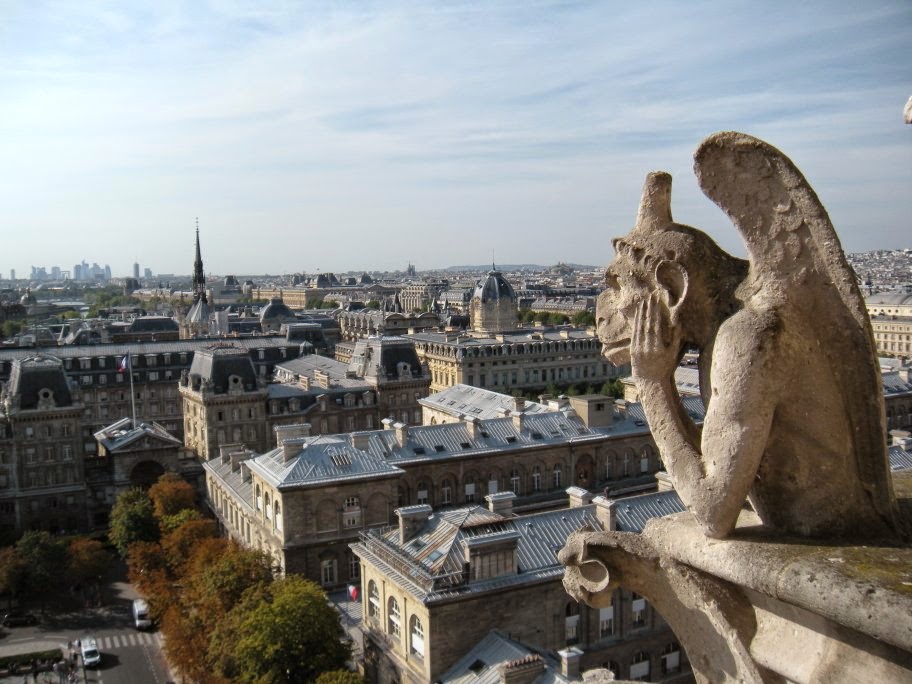
Dusk atop the Notre Dame bell tower and the river Seine makes her presence known. On the horizon she begins the charge, a silver glimmer ducking around towers and teapot domes, hidden at one curve, brazenly obvious around another.
From this vantage point, the river’s importance is obvious. It has been Paris' greatest soldier and liberating cleanser. It has been a demarcation line between left and right, Bourgeoisie and Bohemian, and a friendly landmark for many a wandering visitor. Its current is near impossible to judge, ebbing and flowing in modern times with tourism barges and Gendarmerie police boats.
In so many ways, the river is the source of the City of Light. All walks of life gather near it, over it, on it and all Parisian monuments sit back at a respectable distance. Its proletariat power is unmatched in the city limits.
And yet the Seine, filled to the banks with history, splits in deference to the island housing Paris’ most enigmatic, manmade creation – the cathedral of Notre Dame.
High atop the majestic cathedral, I stepped to the wall to gaze upon the river and the Eiffel Tower in the distance. All of Paris was spread out before me. At every angle the nooks and notches of this famous place of worship held a mysterious vibe, quirky and gothic all at once. It took me a moment to realize that the bit of macabre whimsy was emanating from the motionless figures perched out over oblivion.
The gargoyle hanging out next to me had a permanent, toothy smirk and I couldn’t help but wonder if he was laughing at how great his view was, or perhaps that the great river Seine had to bow to him and his brethren, a bunch of water-gurgling stone monkeys. I assumed it was probably a bit of both.
There was no denying that Quasimodo and his immobile buddies had themselves a prime piece of Parisian real estate. Atop the bell tower at Notre Dame, there is a jaw-dropping panorama in all directions. No matter which way you look, there exists a place, a person, or an experience that leaves you in awe.
I began to think of the string of unforgettable moments I had during my time in Paris. There were, of course, the landmarks: Eiffel Tower, The Louvre, Arc du Triomph, the list goes on.
There was, of course, the food. To this day, there has been no taste quite like munching on a fresh crepe sucre or crepe Nutella that was made in front of me by a street vendor.
And there was, of course, the history. The old paper musk that filled the Shakespeare & Company bookstore lingered, in a good way. That old bookstore was graced by the likes of Walt Whitman and countless other writers over the years. There’s even a small bed, desk, sink and typewrite upstairs free for any upstart/struggling writer to utilize. Few purchases in my life have given me the same amount of chills as the book I bought there – a copy of Shakespeare’s “Othello & Cymbeline” from the year 1900.
But for my money, nothing in Paris tops Notre Dame.
The previous day, I went into the cathedral and toured its depths while the priest conducted a Mass in French. His voice, echoing through the hollow stone, brought such warmth that he made this massive structure feel intimate. In my gratitude, I lit a prayer candle and became part of the congregation in my own tiny, flickering way.
But it wasn’t until I spent 30 minutes in line to climb 300 stairs that I truly appreciated Notre Dame and by extension, Paris.
At the top, the best moment came when my camera battery ran out. All I could do was enjoy the view through my own eyes – unimpeded by a lens.
Victor Hugo might have wanted us to pity his humble hunchback, but me, I envy him. Not just because of the view, but because he’ll forever be in the pages of Paris. I had to leave the City of Lights six hours later on a high-speed train.
But you won’t hear any complaints out of me. I've heard the squawking paparazzi around the Mona Lisa; I’ve eaten escargot at a street café; I've smelled fresh-baked baguettes; I’ve read a book on the lawn under the Eiffel Tower.
Up on top of the Notre Dame bell tower, I've seen a gargoyle smile at the setting sun. And if it’s good enough for the gargoyles, it’s good enough for me.
How the West is Wed

The following appeared in the January, 2015 issue of Destinations Travel Magazine
http://destinationstravelmagazine.com/2015DestinationWeddings/#/90
http://destinationstravelmagazine.com/2015DestinationWeddings/#/90
Cowboy boots with your couture gown, cacti in
the centerpieces; barbecues instead of ballrooms and bordellos instead of
bridal suites – this is how the West is wed.
From elegant services set against stunning
sunsets to non-traditional, cowboy-themed pageantry, the American Southwest
offers unique options for tying the knot. Scottsdale, Arizona and the
surrounding region, in particular, utilizes its reputation as a well-known
vacation destination as an impetus for destination weddings.
When Brian Hartigan and fiancée Kristine
McDonough sought to venture far from their Massachusetts home for their big
day, they honed in on Arizona as their desired destination, for the
unparalleled scenery, long list of things for their guests to do, and almost
guaranteed good weather.
The couple visited multiple venues around the
greater Scottsdale region and was enamored with almost every one, citing the
endless supply of beauty mixed with a rustic charm unknown to other parts of
the country. Ultimately, however, it was a resort tucked into the saguaro
cactuses and scorched mountains of a town named Fountain Hills that won over
the couple and, accordingly, the hundred guests who attended their wedding.
Like an oasis along a mountain ridge, CopperWynd
Resort boasts an extraordinary panoramic view of the surrounding Sonoran desert
and rugged mountain range amidst lush native vegetation and flowers. Onsite
accommodations include luxury hotel rooms overlooking the valley below, as well
as an entire neighborhood of large family villas. As the desert sun sets over
the adjacent mountain ridge, the best view is typically from a room or villa
balcony, where a glass of wine and a lounge chair make for the single best
tourist attraction in Arizona.
 But the resort’s wedding venue, set atop an
emerald green bluff overlooking the endless desert-scape, brings CopperWynd
from a must-see to a must-marry.
But the resort’s wedding venue, set atop an
emerald green bluff overlooking the endless desert-scape, brings CopperWynd
from a must-see to a must-marry.
Days before the Hartigan/McDonough wedding,
staff bustled around the grounds planting new flowers to take advantage of the
recent, rare rains. The result was a mesmerizing contrast as the bride’s white
gown flowed into view around the traditional Southwestern sandy building, past
small explosions of color, across the green lawn to the altar. To further add
to this surreal setting, the couple worked with local vendors to add local
touches, like cacti, sun-bleached tree branches to frame the altar, and mason
jars filled with candles hanging from an adjacent tree.
 Planners also ensured the timing of the ceremony
synced with the resort’s most attractive feature: the sunset. At the most
poignant moment of the nuptials, the couple and the desert backdrop were bathed
in a romantic orange glow.
Planners also ensured the timing of the ceremony
synced with the resort’s most attractive feature: the sunset. At the most
poignant moment of the nuptials, the couple and the desert backdrop were bathed
in a romantic orange glow.
For those looking to get hitched in a more
nostalgic and creative place, couples need not travel very far from Scottsdale
to find another venue that captures the imagination and revels in the
traditions of the Old West. Goldfield Ghost Town, located near Apache Junction
along the historic Apache Trail, is the place for a cowboy-inspired Old West
wedding, set amongst an old time 19th century village.
Goldfield brings a bit of hokey tourism to the
party, which in this case is a good thing. You’d look out of place without
boots, spurs and Stetsons.
The town sits on a hill in the shadow of the
impressive and imposing Superstition Mountains, which themselves are worth a
ride out to this remote location. They loom in a beautiful and mysterious way
over this small town, which consists of a main street with a few offshoots, an
old mine, a perimeter railroad, shops, a saloon, a bordello and a chapel at the
very top of the bluff.
 The Church at the Mount performs multiple styles
of wedding ceremonies, from traditional to themed. Ceremonies can take place in
period costume, feature carriage and horseback rides for the couple, or even a
staged stick up. It’s an easy stroll, albeit through dusty town roads, to an
indoor or outdoor reception at the Mammoth Saloon and Steakhouse. And it’s an
even easier
time at Lulu’s Bordello suite, where they will gladly put up the happy
couple.
The Church at the Mount performs multiple styles
of wedding ceremonies, from traditional to themed. Ceremonies can take place in
period costume, feature carriage and horseback rides for the couple, or even a
staged stick up. It’s an easy stroll, albeit through dusty town roads, to an
indoor or outdoor reception at the Mammoth Saloon and Steakhouse. And it’s an
even easier
time at Lulu’s Bordello suite, where they will gladly put up the happy
couple.
Scottsdale’s matrimonial venues are not simply
for the nuptial blessings. With so many golf courses, attractions, ranches and
National Parks, the region provides for a comprehensive wedding experience.
Greasewood Flat, located in the dusty outskirts
of Scottsdale, is an outdoor cowboy playground. From horseshoe pits and
open-air barbecue to whiskey bar stalls and a dance floor under the stars, this
local watering hole hosts groups large and small to enjoy a rustic gathering.
The setting is perfect for a pre-wedding party that welcomes out-of-town guests
and introduces them to some local cuisine and culture.
The Hartigan/McDonough wedding, for example,
brought their guests to Greasewood Flat for their rehearsal dinner, renting out
a large section of the grounds filled with picnic tables and covered by a
wooden lean-to. Staff barbecued hamburgers, chicken and pulled pork while
guests played horseshoes and listened to the live band rattle off traditional
country songs. The couple’s family and friends perused the scenery, animal
stalls and saloon and mingled with the other patrons who had settled into the
venue’s main area.
 Strings of lights wove through the trees and
along the ramshackle buildings throughout the venue. But if one was to step
just a few feet away the desert sky was just as well lit from innumerable
stars.
Strings of lights wove through the trees and
along the ramshackle buildings throughout the venue. But if one was to step
just a few feet away the desert sky was just as well lit from innumerable
stars.
It was under those stars that the bride and groom
were called out by the band to perform the two-step. Brian and Kristine kicked
off just as the band struck up the first note of a slow, romantic cowboy
ballad. At the center of the dance floor was a wagon-wheel-topped lamppost; they
whirled around it, the spinning like the spokes while the music hummed along.
The only thing brighter than the stars and strings of lights was the bride’s
smile. When the song ended the lead singer congratulated the couple and led an
applause that rumbled from family and friends all the way through the hundred
other locals sipping whiskey at Greasewood Flat.
Traditional or non-traditional, elegant or
rustic, Southwestern venues offer a variety of fun, unique options set against
some of the most striking natural scenery in America. And one thing is as
certain as the Arizona heat: in the Old West, a couple can mosey down the aisle
in style.
Tuesday, December 9, 2014
A Starry Night at Amsterdam’s Van Gogh Museum
During the evening an artistic air wafts over
Amsterdam’s museum-studded park Museumplein. The magnificent
Rijksmuseum, recently restored and renovated, is warehouse of historic
masterpieces, and the exterior’s sweeping grandeur, spotlighted from the
surrounding gardens, is a work of art in itself. Tourists and
locals play and pose amongst the oversized, recognizable, “I amsterdam”
letters, which take on ethereal form from nighttime mood lighting. The entire
scene shimmers and distorts in an elongated reflecting pool. And at the far
corner of the park, past the gardens, café and outdoor art exhibits, the Van
Gogh museum inhales the artistic air and transports visitors to the world of a
virtuoso.
Vincent Van Gogh had the rare ability to capture
viewers with his paintings; leaving them somewhere between genius and madness,
flush with vivid colors, distinctive techniques and deep emotion. Fittingly,
his museum works from that same palette.
The Van Gogh Museum weaves
the artist’s trademark individuality and layered emotions into its exhibition space.
And like many of Van Gogh’s paintings, a quick glance does not do the museum
justice. Luckily, the museum offers late hours until 10:00pm on Friday nights,
complete with cocktails, moody music and interactive activities. The result,
much like a Van Gogh painting, is a multidimensional and somewhat hazy experience
that reveals the deeper stories behind the artist and his works.
The building itself is not filled to the brim, as
you might expect from a museum dedicated to one person, and some famous pieces like
The Starry Night are not located
here. Regardless, the museum houses the world’s largest collection of Van Gogh
works, including well-known masterpieces such as the vibrant Sunflowers and The Bedroom, and the colorful but mournful Wheatfield with Crows, one of his last paintings.
Large portions of the works are grouped
chronologically, while other sections focus on comparing pieces and
highlighting specific aspects of his work. The collection ranges from early
works to his final masterpieces, and also displays sketches and writings. Taken
all at once, the collection demonstrates his artistic evolution and personal
devolution.
The
Potato Eaters from 1885, for example, is a dark,
intricately detailed scene where Van Gogh plays with light and shadow. But by
1889, Undergrowth portrays Van Gogh’s
trademark heavy brush strokes and use of color; varying shades of green, yellow
and blue are pulled from the underbrush up the twisting trees, adding a fluid,
wave-like motion to a dense forest landscape.
The contrast of Van Gogh’s own works is, in many
instances, stark and shocking – bright colors versus stormy landscapes,
detailed sketches versus harsh brush strokes. The range of paintings shows the
range of Van Gogh’s skill, as well as his cutting-edge use of novel techniques,
and how his own emotions so vividly play out in color on a canvas stage.
The Van Gogh Museum tells the story of the artist’s
tormented history through his artwork, and also pays special attention to his
influences. As a complement, they include paintings by contemporaries and
friends of Van Gogh, and in some cases written correspondences. In many
instances, works from friends like Emile Bernard and Paul Gauguin are placed in
sequence next to Van Gogh’s own interpretations. The same is done with the
international cultures that influenced him, from France to Japan. The result on
many walls is a seamless transition that explains, without words, a surprising
array of inspirations.
Van Gogh’s Almond
Blossom, for example, painted in
1890 as a gift for his newborn nephew, displays very clear Japanese influences,
with delicate, wispy branches set against a vivid color scheme.
As an artist Van Gogh evolved, and true to form, his
museum also has not been content to remain static in its aesthetics. The main
building opened in 1973 but renovations updated and modernized the structure
with a new exhibition wing in the late 1990s. Mobile apps, classes and special
events were developed for a more inclusive experience. A new glass entrance
building is slated to open in the summer of 2015.
So while his painting by the same name is brilliant
and beautiful, spending an actual starry
night in Amsterdam is a much more fitting way to experience Vincent Van
Gogh.
Friday, December 5, 2014
The Behemoth in Black Canyon

America’s most memorable attractions are known for one
common theme: their enormity. California Redwoods dwarf surrounding foliage.
The Grand Canyon carves a massive cleft in the land. The Rocky Mountains reach
to the heavens. Roadside attractions range from the largest ball of twine to
the largest bottle of catsup. Clearly, Americans like things larger-than-life.
But one structure located in America’s Southwest outpaces
them all when it comes to actual, practical utility – because it is actually a
utility plant.
The Hoover Dam, wedged down into the craggy, plunging Black
Canyon, is a behemoth concrete cascade that spans two states while controlling
and contorting a force of nature – the Colorado River.
Located 45 minutes from the Las Vegas Strip, the Hoover Dam
is an easy, worthwhile day trip away from Sin City. However, the thought of
leaving Las Vegas to go see a mound of concrete in the desert may not appeal to
the wild and crazy vacationers dancing, gambling and eating their way through
the casino resorts. But it should.
For all the awesome man-made sights on the Strip – the
curving Wynn towers, the MGM’s massive golden lion, the Eiffel Tower – I would
argue none of them can compare to the Hoover Dam when it comes to sheer
immensity. It is awe-inspiring, over-the top, larger-than-life; everything
Vegas embodies. But you remove the stomach-churning decadence and add in a
large dose of American ingenuity. Besides, getting some fresh air is a welcome
change from the recirculated casino oxygen.
The ‘wow’ moments come early and often when you arrive at
the Hoover Dam from the Nevada side. As soon as you step out of the car at the
parking structure, you notice the massive wires overhead. Let your eyes follow
them on their run down to the steel towers jutting from the cliffs, before they
leap into oblivion as they cross the gorge.
Up to the right, the swooping bypass bridge – itself a
marvel of modern engineering – soars among the clouds, allowing traffic to flow
and not clog up the road atop the Hoover Dam.
The visitor’s center across the road from the parking
structure is a good stop and the launching point for the power plant tours that
take you deep into the heart of Hoover Dam’s inner workings. It also affords a
great view.
But being atop the dam is undoubtedly the most exciting
aspect of visiting this National Historic Landmark.
As you stroll out onto the dam, you pass tall statues and a memorial
paying homage to those who sacrificed to construct this engineering monster. Also
tucked away into the side of the rock face is a small plaque with a dog
embossed on it. It marks the grave where the workers’ mascot is buried: a stray
puppy who accompanied the workers from the crew campsite to the worksite every
day.
The height, the size, the smooth, curving drop all the way
down to the river – it is breathtaking from every angle. I started on the left
side of the road, looking up the mighty Colorado River at the long arms reaching
out into space, ending in the lanky cylindrical turbine towers. There are two
sets of two, standing erect like guards outside castle gates.
 I kept walking and as I did stepped from Nevada to Arizona.
On one set of towers is a clock marking the time in the Pacific Time Zone,
while the other has a clock marking the Mountain Time Zone. In the middle, a
plaque from 1955 commemorates when the American Society of Civil Engineers
named the Hoover Dam one of the seven modern civil engineering wonders in the
United States. The plaque also marks the state line between Nevada and Arizona.
I kept walking and as I did stepped from Nevada to Arizona.
On one set of towers is a clock marking the time in the Pacific Time Zone,
while the other has a clock marking the Mountain Time Zone. In the middle, a
plaque from 1955 commemorates when the American Society of Civil Engineers
named the Hoover Dam one of the seven modern civil engineering wonders in the
United States. The plaque also marks the state line between Nevada and Arizona.
I crossed to the other side of the road atop the dam and
gazed over the railing from one of the protrusions. The view down was iconic: a
pale white, smooth curving slide, plunging to the facility and river far below.
It was dizzying, and the stomach lurch came each time I looked over the edge.
The history and factual information woven throughout the dam
and the power plant add to the extraordinary sights. The power plant tour
provides much of it, putting you face to face with the gargantuan generators at
the heart of the Dam. Each year the plant generates enough power to serve 1.3
million people and is still one of the largest hydropower plants in the U.S.
In the visitors center I learned the history of the dam’s
construction, from start to finish.
From 1931 to completion in 1935, the daredevil workers erected
the dam, defying death at every turn. The dam was named for 31st President
Herbert Hoover. It was completed ahead of schedule and under budget. The Hoover
Dam is a steadfast testament to America’s ingenuity and pioneering spirit.
Everything about the Hoover Dam is big: wide views, a vast
and fascinating history, and a big rush of excitement every time you peer over
the edge. It all adds up to a Dam good time.
Wednesday, October 8, 2014
Get lost in a lost city: Pompeii

I stood atop the hill at the far end of Via del Vesuvio,
overlooking the ruined city of Pompeii, Italy.
Crumbling brick walls sprawled in every direction forming a
red-gray rock labyrinth that seemed to run from the foot of the infamous
volcano all the way into the sea. Row after row of ancient buildings
crisscrossed the landscape, with sunken roads marked by deep cart grooves and
lined by an unending array of historic artifacts – some well known, and some unknown.
As I watched the tourists crawl along the timeworn walkways,
I began to think about how easy it was to get lost here.
From my vantage point, underneath a large tree with weeping
branches nearby the old city walls, my eyes traced the main avenue, trying to
use the site as a living map to plan my next route through this massive,
ongoing archaeological dig. But my imagination kept getting in the way, as I
thought of the city in its prime, buzzing with people from every social stratum
going about daily, ancient life unaware of their weighty place in history – not
unlike the tourists walking around the grounds at that very moment.
 I was getting lost – lost in the mystique of Pompeii, which
just so happens to be the best way to experience this ancient city.
I was getting lost – lost in the mystique of Pompeii, which
just so happens to be the best way to experience this ancient city.
A visit to Pompeii can be grueling. At peak season, tourists
abound, scampering after their guides like chicks after the mother hen. Uneven
stone streets, heat and the sheer size of the site make for a labor-intensive
visit. Then add in the historical weight, which hits you the moment you see a
body frozen in time, twisted as it gasps a final breath.
Hiring a guide to show you around Pompeii is one way to
alleviate at least a portion of the burden. Guides are easily accessible and
can provide a deeper knowledge of the individual highlights, such as the
mansions, bath houses and statues unearthed and preserved from the 79 AD
Vesuvius eruption.
But with a map and guidebook, provided at the ticket office,
I explored the city without trouble, finding the big attractions and stumbling
upon some spots not highlighted in the visitor’s booklet. Every once in a while
I would linger at the back of a large group to grab a little extra (free)
information from their guide, but for the majority of my day in Pompeii, I
wandered the streets. I got lost and my experience was richer for it.
Without someone narrating, my imagination had to work a
little harder and in doing so, I got an appreciation for the seemingly mundane
things. Everyday items awed me.
Right along one of the main thoroughfares I came upon a
large group examining an open-air plot, clearly marked by the guidebook as a
bakery. The House of the Baker contained ovens and mills, easily identifiable
among the stones and collapsed walls.
 Walking past it, I took a few more rights and lefts and
separated myself from the crowd. I came across another open-air building with
similar structures inside. There were the familiar vat-like ovens and large
stones for milling. This one wasn’t on the map or in the guidebook, but it was
clearly another bakery. The larger bakery had prime real estate, probably
meaning it drew a large crowd back in its heyday, as well as in modern day. But
this smaller bakery, off-the-beaten-path, was just as well preserved and just
as impressive. I began to wonder who made the better bread and who the Pompeii
locals back in 79 AD preferred.
Walking past it, I took a few more rights and lefts and
separated myself from the crowd. I came across another open-air building with
similar structures inside. There were the familiar vat-like ovens and large
stones for milling. This one wasn’t on the map or in the guidebook, but it was
clearly another bakery. The larger bakery had prime real estate, probably
meaning it drew a large crowd back in its heyday, as well as in modern day. But
this smaller bakery, off-the-beaten-path, was just as well preserved and just
as impressive. I began to wonder who made the better bread and who the Pompeii
locals back in 79 AD preferred.
It was a similar experience when I came across what appeared
to be a storefront. There was a stone counter with deep holes bored into it –
it was a bar. The guidebook described how shopkeepers would fill the holes with
beverages or foodstuffs. Hungry people strolling by would stop in for a snack
or a drink, leaning at the counters to chat with their neighbors. I wandered
past one of the heavily attended bars and zigzagged my way down side avenues. I
began to notice more and more of these bars – the familiar counters easily
recognized by their holes.
By getting lost in Pompeii, the city became more than just a
tourist attraction with great photo ops; it was more than a few dozen
highlights in a guidebook. Pompeii became a real city, full of real people
living every type of life.
In one ruined mansion, a shattered mirror was embedded and
melted into the rock wall. Climbing through the rooms of another destroyed
home, I found a stone staircase leading nowhere, but at the top was a
360-degree view of the city.
Of course the better-known attractions at Pompeii are also
well worth your time, and even a full day will not be enough to see everything.
The Forum Baths are well preserved and house a variety of interesting sights.
The Forum itself, the center of life in ancient Roman cities, extends for
hundreds of yards, lined by columns, statues and broken buildings. At one end
of the Forum the ever-present volcano Vesuvius heaves in the background – just
a little too close for comfort.
The Ampitheatre and Gymnasium located in the corner of the
site near the Sarno Gate give insight into the ancient city’s devotion to
entertainment, as do the famous brothel houses such as the Lupanar with its
erotic frescoes. You’ll know the Casa del Fauna by the easily recognizable
statue of a dancing faun and beautiful grounds.
 It is all part of a city that, at its heart, embraced
balance. Mansions sat next to hovels and temples, government buildings were not
too far from the brothels. It lived and died with the workers nearby the
vacationers.
It is all part of a city that, at its heart, embraced
balance. Mansions sat next to hovels and temples, government buildings were not
too far from the brothels. It lived and died with the workers nearby the
vacationers.
I wandered, stumbling upon top spots and hidden gems alike.
My route ultimately took me to the top of the hill at the far end of Via del
Vesuvio, where I spent a few minutes soaking in the extraordinary view and
letting my mind do some wandering.
I say get lost in this lost city. You will be amazed at what
you find.
This article appeared in the October issue of Destinations Travel Magazine
Sunday, September 7, 2014
Dam it, leave Las Vegas

The following appeared in the September, 2014 issue of Destinations Travel Magazine
http://www.destinationstravelmagazine.com/September2014/#/76
Tell people you ventured off the Strip during your trip to Las Vegas, and you’ll more than likely be met with a guffaw, a wry, unbelieving smile or a downright nasty rebuttal. Sure, there are advertisements all around the city for helicopter rides and day-trips, and nearby “Old Vegas,” where the original casinos hawk penny slots and a more rugged, smoky version of Sin City. But for most, the glitz, glamour and round-the-clock sensory stimulation that is modern Las Vegas envelopes visitors, providing no reasonable need to stray from its sparkling casinos, dazzling dance floors and bountiful buffet lines.
http://www.destinationstravelmagazine.com/September2014/#/76
Tell people you ventured off the Strip during your trip to Las Vegas, and you’ll more than likely be met with a guffaw, a wry, unbelieving smile or a downright nasty rebuttal. Sure, there are advertisements all around the city for helicopter rides and day-trips, and nearby “Old Vegas,” where the original casinos hawk penny slots and a more rugged, smoky version of Sin City. But for most, the glitz, glamour and round-the-clock sensory stimulation that is modern Las Vegas envelopes visitors, providing no reasonable need to stray from its sparkling casinos, dazzling dance floors and bountiful buffet lines.
Vegas, an oasis in the desert, is hard to escape because it
has been constructed in such an over-the-top, larger than life way. It is a
showcase of man-made wonders, even if they’re hard to recognize behind a thick
veil of neon lights. There are engineering and architectural marvels up and
down the Strip, from the sultry golden curves of the Wynn and Encore resorts,
to the booming Bellagio water fountains. While you are staring at the Luxor’s
pyramid-shaped hotel, it can be hard to remember you are staring at a pyramid-shaped
hotel.
So much of Las Vegas is impressive. From the sheer size of
the resort hotels, to the level of creativity, planning and engineering that
goes into their operation, and success.
But for all the awesome sights on the Strip, none of them
can compare to the man-made edifice looming just outside the city. More
impressive than a pyramid, an Eiffel Tower, or a giant golden lion, is an
awe-inspiring, over-the top, larger-than-life manmade marvel that dwarfs them
all, and also enables them to exist: the Hoover Dam.
About a forty-five minute drive from the Strip, the Hoover
Dam is an easy side trip for anyone looking to get outdoors and away from the
stale air inside the casinos. Most resorts either have rental car options or
can point you to one nearby. The short drive through the dusty city outskirts
in a convertible is a treat in itself.
But the whoa moment comes after you park that rental car and
stroll down past the visitors center. Like so many sights back in Las Vegas,
the sheer size is what hits you first – only here, there are no flashing lights
and colorful signs to detract from the impression. There is only enormity: the
craggy, plunging rock walls of Black Canyon; the swooping bypass bridge soaring
high above it in the distance; and ultimately, the dam.
Wedged into the gorge, it cascades like a massive concrete
waterfall – like if Niagara Falls was solidified in alabaster.
One of the benefits of a visit here is that it costs nothing
to walk across the dam (although you pay to park), which happens to be the most
exciting aspect of this National Historic Landmark. Statues and memorial honor
those who sacrificed to construct the behemoth, but a stroll out onto the dam
does more justice to their memory.
Standing atop, looking up the mighty Colorado River, you see
long arms reach out into the ether, ending in cylindrical turbine towers. There
are two sets of two, standing like sentinels at the gates of some medieval
fortress. The dam is so big it actually defies time – with one side sitting in
Nevada and the other in the adjacent state of Arizona. One set of towers has a
clock marking the time in the Pacific Time Zone, while the other has a clock
marking the Mountain Time Zone.
 Cross to the other side of the road atop the dam and gaze
over the railing from one of the protrusions. The view down is iconic. It is a
pale white, smooth curving slide, plunging to the facility and river far below.
It is dizzying, and if your stomach doesn’t lurch you need to clean your
glasses.
Cross to the other side of the road atop the dam and gaze
over the railing from one of the protrusions. The view down is iconic. It is a
pale white, smooth curving slide, plunging to the facility and river far below.
It is dizzying, and if your stomach doesn’t lurch you need to clean your
glasses.
Steel towers jut from the rockface, wires crisscross through
the air, and a steel cable traverses the gorge, used in its heyday to carry
supplies from side to side.
The question is inevitable: how did they do this? The
visitors center is the place for answers. Multiple options are available for
you to delve further into the Hoover Dam’s history and relevance.
The hands-on powerplant tours take you deep in the bowels of
the facility and put you face to face with the beating heart of the Dam – the
gargantuan generators. Each year the plant generates enough power to serve 1.3
million people and is still one of the largest hydropower plants in the U.S.
Besides power, the water control brings domestic water to more than 20 million
people from Las Vegas to Los Angeles.
But if you don’t have time for the tour, or the interest,
the cheaper option of walking the visitor’s center affords just as much
information. The self-guided stroll past exhibits describes the construction
process from start to finish. Lest you think learning about rocks, water tables
and river currents are antithetical to your Vegas vacation, think again.
The tidbits and facts swirling like eddies around the dam’s
history and construction are almost as impressive as the dam itself. From 1931
to completion in 1935, high-wire acrobatics and daredevil workers made the
building possible, with death a constant threat. And the particulars are
equally inspiring. The dam’s namesake, President Herbert Hoover, urged the dam
be self-sustaining, and today the facility is supported financially solely from
the money it brings in through selling the power it creates. And perhaps most
impressive of all, the dam was completed under budget and ahead of schedule.
The Hoover Dam also provides tangential recreation, if a
multi-day trip away from Vegas is more your style. Lake Mead, north of the dam
on the Colorado River, is one of America’s most popular recreation
destinations. Any and every form of water sport and water vehicle populate the
lake year-round, since it has a 12-month season.
But the Hoover Dam is the gatekeeper of it all, and a
simple, worthwhile day trip from Las Vegas. You can see how the Dam and Sin
City share many of the same traits. Both were built with the same American
ingenuity, unflagging tenacity and overwhelming creativity. Both remain
larger-than-life testaments to human innovation and potential. The difference
is that the Hoover Dam’s finishing coat is a dull gray, while Las Vegas is
continuously painting itself with multicolored swatches.
The Hoover Dam may not sound like the most exciting site in
Sin City and a lot of Vegas goers will question your sanity if you suggest a
side trip. But dam them – if you want a real rush, go peer over the edge of the
Hoover Dam.
Tuesday, August 26, 2014
Passing on the travel torch

It took me seventeen years to set foot in Europe. When I
finally got there, the experience changed my life.
It took my daughter, Cordelia, less than one year to visit
Europe, but the affect it had on me was quite familiar. This time it was my
little girl who changed my life.
My love for travel began in earnest when I was in high
school at St. John’s Prep in Danvers. My World History teacher, Brother George
Donnelly, had a knack for weaving Europe’s intricate history into a rich
tapestry of narratives, set against some of the most beautiful and interesting
locations on the planet. When he planned a school trip to Italy, Greece and
Turkey, my friends and I could not get permission slips signed fast enough. Brother
George colorfully articulated the world’s most historic places, but made sure
we all understood there was no replacement for seeing them in person.
 I was nervous to go. I had never been that far away from
home for that long. But once we arrived, the breathtaking moments began piling
up – atop the Acropolis peering out over Athens, scurrying through a Turkish
bazaar, and trekking through the ruins of Pompeii.
I was nervous to go. I had never been that far away from
home for that long. But once we arrived, the breathtaking moments began piling
up – atop the Acropolis peering out over Athens, scurrying through a Turkish
bazaar, and trekking through the ruins of Pompeii.
My nerves were replaced by a bubbling sense of adventure
that continued to grow exponentially into adulthood.
As I grew to love travel, I grew to love sharing my
experiences with others. I write, I photograph, I tell stories – and somewhere
along the line, I hope to spark the same sense of adventure that was instilled
in me by the people and places of my youth.
So when my daughter was born on August 1, 2013, I was
given the opportunity to do what so many people at home and abroad had done for
me: pass along the travel torch.
My wife shared my ambition, after several attempts to reel
in my ever-expanding imagination for what was possible with an infant.
Our first trips with baby took us all over America’s East
Coast. Cordelia went to Colonial Williamsburg, Fenway Park and Shakespeare in
the Park. She visited beaches, big cities, Civil War battlefields, went inside
the White House and to the top of several mountains. She fell asleep at more
than a few wineries.
Along the way something happened I did not anticipate.
As the baby grew, so too did my anxiety about traveling
with her. All the uncertainties and unknowns that new parents face every day
clouded the excitement of sharing adventures together.
Suddenly the international experiences I had always
envisioned seemed too difficult and worrisome to attain. My confidence waned; I
even wrote fewer travel pieces.
I was most apprehensive about an impending family trip to
Italy for Cordelia’s first birthday. Normally I would have been reading up on
local limoncello makers and hole-in-the-wall gelato shops. Not this time.
The week before the trip the baby got sick. Then numerous
world events coalesced to make it feel like danger lurked at every airport.
Questions scrolled through my head constantly: Would she be good on the plane?
What if we hit turbulence? Would the stroller hold up on cobblestone streets?
Would she make a mess at every Italian restaurant?
For more than a decade, my most loyal travel companion was
my uninhibited sense of adventure. Now it was gone, replaced by hesitation and
shot nerves.
I let myself worry away my sense of adventure. I had
forgotten the personal credos forged from years of improvising and exploring.
But we went to Italy.
In one week, my one-year-old daughter restored what I had
lost.
She was good on the plane, better than we could have ever
hoped, even with turbulence. Our hand-me-down stroller took everything Italy
threw at it, even the rough Naples Airport baggage crew. And of course the baby
made a mess at every restaurant – but every Italian server and proprietor loved
her for it.
 We were in Pompeii the day of Cordelia’s first birthday. I
was carrying her around in a backpack carrier, traversing the ancient streets
in the shadow of Mt. Vesuvius. We stopped to hydrate and I leaned against the
rough stonewall of a ruined building. I felt the backpack sway and Cordelia’s
weight shift out the side. I turned my head just enough to see her lean out of
the backpack carrier and touch the building wall, unprompted. Her little head
peered out with wide eyes and she was smiling, fully engaged by the simple feel
of ancient stone on her fingertips. She may not remember it in the future, but
in that moment she was enjoying the experience.
We were in Pompeii the day of Cordelia’s first birthday. I
was carrying her around in a backpack carrier, traversing the ancient streets
in the shadow of Mt. Vesuvius. We stopped to hydrate and I leaned against the
rough stonewall of a ruined building. I felt the backpack sway and Cordelia’s
weight shift out the side. I turned my head just enough to see her lean out of
the backpack carrier and touch the building wall, unprompted. Her little head
peered out with wide eyes and she was smiling, fully engaged by the simple feel
of ancient stone on her fingertips. She may not remember it in the future, but
in that moment she was enjoying the experience.
I’ve learned the best travel moments are rarely planned,
especially the ones that change you on a deeper level.
In high school I stood in Pompeii awed at the sight of a
sprawling city where time stands still. In the same place fifteen years later,
I watched my baby pat an historic stonewall and giggle as she rubbed the red
dust together in her hands.
Cordelia reinvigorated my sense of adventure by exhibiting
a hint of her own.
I am under no illusion that traveling with a child will
get any easier. But now, thanks to my daughter, I have no reason not to try.
Wednesday, July 2, 2014
Traveling on the Wild Side

Everyone has a wild
side, especially travelers. We instinctually seek out the unknown, explore
the unexplored and we traverse the globe looking for excitement. It's in our
nature, which might be why we feel a kinship with our friends in nature.
I've met plenty of
interesting people in plenty of interesting places around the world. But I have
to admit, some of the most memorable souls I've shared a laugh with, had fur
and tails. Zoos, parks, mountains, forests - the lower levels of the food
chain are sometimes much better company than the top. As long as they
don't turn you into a chew toy, seeking out or stumbling upon animals, either
in the wild or in feigned wild, can add a whole new element to your vacation.
 Washington, D.C. is a great example. The city is
full of tourists exploring monuments, museums and memorials. Most are worth a
visit, but the Smithsonian National Zoo takes the action out of the past and
into the present. The National Zoo is free like many of the museums in D.C.,
and it has undergone a makeover in recent years to make for a park that flows well
from top to bottom. The main attraction is usually the pandas, and the new baby
panda Bao Bao that has set Washington on another panda craze. But there is much
more to the zoo, including a small mammal house packed with everything from
meerkats to marmosets. The deepest belly laugh I ever heard come from my
10-month-old daughter was when a golden lion tamarin bounced around in front of
her. The tamarin was very effective – we left the Zoo with a toy version.
Washington, D.C. is a great example. The city is
full of tourists exploring monuments, museums and memorials. Most are worth a
visit, but the Smithsonian National Zoo takes the action out of the past and
into the present. The National Zoo is free like many of the museums in D.C.,
and it has undergone a makeover in recent years to make for a park that flows well
from top to bottom. The main attraction is usually the pandas, and the new baby
panda Bao Bao that has set Washington on another panda craze. But there is much
more to the zoo, including a small mammal house packed with everything from
meerkats to marmosets. The deepest belly laugh I ever heard come from my
10-month-old daughter was when a golden lion tamarin bounced around in front of
her. The tamarin was very effective – we left the Zoo with a toy version.
Other zoos around the world are also worth a
visit. In Vienna, Austria, in the gardens of the famous Schonbrunn Palace, lies
a sprawling zoo. But instead of paying, visitors can get a glimpse of the animals by
walking along the pathway running behind the menagerie. It loops up and around,
affording views through a fence of rhinos and other zoo inhabitants. It is a
fun contrast to the grandeur and opulence found in much of this great European
city.
But you don’t have to save a specific
itinerary slot for a zoo or safari park. Many times animal encounters are
unplanned, making them all the more exciting.
On a drive back from Canada, I had the
pleasure of seeing a moose trotting through the forest along the road. In
Interlaken, Switzerland, high in the Alps, a St. Bernard and mountain goats greeted
passengers disembarking from the mountain train, a scene straight from a
postcard. Staying at a lake house at Eagle Rock Resort in the Pennsylvania
mountains, we woke one morning to a large family of deer nibbling on grass a
couple feet from the back door. The loud but lazy sea lions at San Francisco’s
Pier 39 left a lasting auditory impression, and the wild bison that surrounded
my car in South Dakota’s Black Hills came close to leaving an impression in my
fender. And of course, the pigeons in Venice’s St. Mark’s Square are one of the
most iconic images in Italy.
The lure of animals
has to do with genuineness and unpredictability – and our desire as travelers to
experience both. We want to live like temporary locals when we go to a foreign
place, which entails eating, drinking and acting unlike we normally would at
home. It's easy to do that in Dublin or Santiago or Los Angeles. Customs can be
learned, cultures can be appreciated and languages can be absorbed. But what
happens when the language is chirping or roaring and the culture is walking on
all fours? Well, as a traveler you get a genuine form of unpredictability, and that
can cause some very memorable experiences. Just make sure your camera is at
the ready and you’re at a safe distance. Thursday, June 5, 2014
Night moves -- Traveling after dark
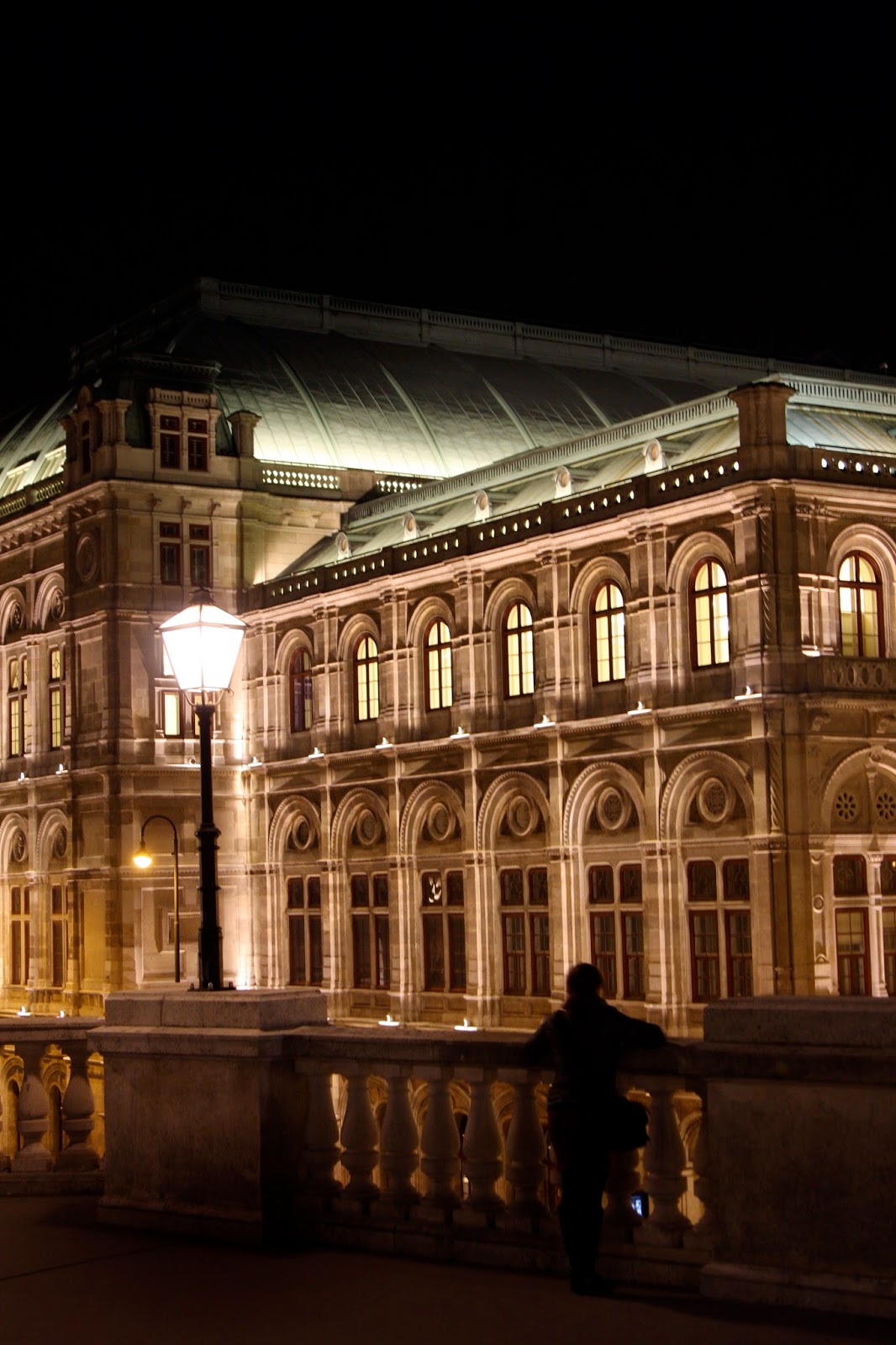
Just because the sun goes down, doesn't mean your camera has to go away or that the traveling has to stop. For photography, night time brings out colors, light, shadows and movements impossible to capture during the day. And with modern cameras, anyone can snap clear photos after dark. For travel in general, night time is the right time to experience those famous landmarks in a new light.
Given the propensity for action photos to blur in low light, I have always found static objects to be excellent evening subjects, especially for someone not schooled extensively in shutter speed and aperture, or someone who does not have bags of lighting and equipment. But in reality, some of the most beautiful things in the world are man-made structures. And as tourist attractions go, the most popular ones around the world more than likely have already perfected the art of nighttime mood lighting.
Take Dublin, Ireland’s Harp Bridge, for example, with its swooping white tower and elegant string-like cables. It makes for a sturdy and whimsical site in between pubs. But after last call, the bridge takes on an effervescent glow reminiscent of the city’s late-night pub vibe. Nighttime Dublin — whether near the bridge or not — is when the tourist and the local crowds come together. Irish hospitality is never more pronounced than when it comes from the guy sitting on the stool next to you. Sing a few songs and then stumble out to see the illuminated Harp Bridge.
The Opera House in Vienna, Austria, was one of the most extravagant buildings I had ever seen, naturally. In a city where music and architecture move together like two ballroom dancers, there are bound to be stunning sights around every corner. When the sunlight dims and the street lights buzz on, the whole city erupts into new life. The Opera House is just one of the more beautiful uplit structures, almost surreal and sparkling like a massive, glimmering gemstone.
But Vienna at night is itself a treasure. Before the Opera House lets out from its last performance of the night, park yourself at one of the sidewalk cafés. There you can indulge in a slice of Viennese pastry, a cocktail and the hum of nighttime passers-by enjoying their stroll along the city’s pedestrian walkways. Even the city’s famous St. Stephen’s Cathedral, eerie with gothic aura during the day, becomes even more so when the shadows begin to creep along its decorated façade and spired, tiled roof.
Vienna is not alone in its knack for nighttime sights. Grab a gellato nearby Rome's Pantheon and enjoy the silence that comes with an empty well-known tourist stop. Sit around the fountain at the entrance to the famed dome, enjoy your treat and listen to the late-night tinkling of utensils on plates as the Italians finish up dinner, whether at the cafes nearby or in their homes in the apartments above. The fountain is perfectly lit to provide a compliment to the rough stone Pantheon, whose blemishes, age and weighty importance are revealed between dancing shadows.Two of the most well-known buildings in the world — the Eiffel Tower and the United States Capitol building in Washington, D.C. — are prime examples of the transformative power of nighttime. Both are immense structures rising out of the darkness, battle-worn but unscathed; symbolic of their respective country’s emergence from obscurity — and, of course, stunning from behind a lens.
So I say get out there at night and see the world when the sun goes down. While you’re at it, try out some of those strange settings on your camera or your iPhone and see what develops. The night belongs to the adventurous.
Subscribe to:
Comments (Atom)