Showing posts with label France. Show all posts

Tuesday, February 21, 2017

Creating your own magic at Disney World’s new art festival


My daughter was posing in front of the Mona Lisa. She had seen so much fascinating art throughout the day, and made it a point to imitate the subject of each piece. Now, she had Mona Lisa’s famous smirk down pat, with one side of her mouth curled up and an eyebrow cocked just so. But her sparkly princess dress made it difficult to fully replicate the purple dragon’s posture.
We clearly weren’t at the Louvre in Paris, even though the Eiffel Tower was just a short walk away. And although we were admiring an original Mona Lisa, it was not a DaVinci – it was a Disney.
That purple posing dragon, that was Figment, Walt Disney World’s cartoon embodiment of the imagination. And his likeness was not just instilled into the Mona Lisa. He was also bellowing on a bridge in Munch’s The Scream and crossing the Delaware with George Washington in Emanuel Leutze’s masterpiece.
Figment has been a fixture around Walt Disney World’s Epcot for years, starring in rides and encouraging kids to create. But this winter, Figment took center stage as Walt Disney World introduced its inaugural International Festival of the Arts, hosted at Epcot from January 13 through February 20, 2017.
The International Festival of the Arts was the newest addition to Epcot’s growing slate of seasonal happenings, and it filled the mid-winter gap in the same way the International Food and Wine Festival highlights the fall and the International Flower and Garden Festival brightens up the spring. With new lands, rides and offerings under construction at other Walt Disney World properties, these types of special events give Epcot an enticing freshness.
The arts festival, though, was unique in that it endeavored to enable as well as entertain, infusing every detail with an inspired dose of the imagination.
By opening day, vibrantly colored signs, vendor stalls and performing areas had popped up. Each character meet and greet photo spot was now adorned with a specialized painting of the spot’s character. A Figment topiary greeted guests near Spaceship Earth. And scattered around the park were enlarged, life-sized renditions of some of history’s greatest paintings – with a twist. They were layered and open-backed so that guests could enter the frames, pose for a photo and become a part of the art.
The festival brought together an array of creative mediums – from painting and drawing to music and singing to performance and culinary art – to celebrate all art forms and the power of the imagination.
Sidewalk chalk artists – a la Bert from Mary Poppins – scribbled their way around the pavilions’ pavement. Moving statues ringed the Fountain View stage. Booths highlighting artwork from Disney artists encircled the central World Showcase lagoon. A flash painter, with rapid and precise brush strokes, created a Donald Duck portrait within moments in front of a cheering crowd. Acrobats flipped and tumbled in China while School groups sang in the Odyssey pavilion.
Food vendor stalls were transformed to serve innovative dishes and flamboyant fare. There was a slice of color-blocked almond cake and a deconstructed Reuben sandwich arranged in a ring of puff pastry. Of course, inventive alcoholic beverages abounded as well, from coffees to margaritas.
In the America pavilion’s theater some of Disney’s own Broadway stars held a series of medley shows. We enjoyed Ashley Brown, who played Belle in Disney’s 2005 production of Beauty and the Beast and then the original Mary Poppins in 2006; and Josh Strickland, who starred in the title role of Disney’s Broadway rendition of Tarzan. They performed songs from Frozen, Mary Poppins, The Little Mermaid and others.
Walt Disney World’s daily park shows already employ some extremely talented performers. But to hear professional Broadway stars was an elevated plane of excellence: a rare and mesmerizing treat that captured almost every patron who strolled past the outdoor stage.
Yes, art was everywhere – but not merely finished products. The theme of the festival revolved more around engaging in the process rather than the framed result. The festival featured an extensive schedule of demonstrations, classes and workshops, as well as interactive experiences for younger guests.
We searched for Figment Mona Lisa and the other Figment-ized paintings as part of Figment’s Brush with the Masters Scavenger Hunt, which encouraged kids to explore each Epcot country and engage with artists who showed off the methods and styles of their homelands. For a nominal fee, we purchased a map and stickers to guide us around the World Showcase and once we found all of Figment’s paintings, we received a souvenir magnet.
The art installations in progress were also fascinating features.
For example, lining one of the walkways was a long, blank canvas about six feet high that curved with the path itself. On opening day, light pencil sketches swooped over the white surface. Later in the day, two artists were furthering the outlines and filling in with bright blue and green paint. I stopped to chat with the painters and learned that they were locals hired to work outside for the duration of the arts festival, painting each day on this expansive backdrop. They showed me a template of what the final, massive painting would be – a beautiful, bright abstract painting of peaks, valleys and wave-like designs, very much in theme with Epcot and its focus on nature and technology.
In museums, we always see the final product behind a frame. But to witness artists at work, and watch the painstaking process of planning, sketching and precision evoked a deeper appreciation. What was to become of the gigantic piece of art? According to the painter, at festival’s end it would be sliced up, mounted and put up for sale.
That wasn’t the only enormous, blank canvas on site, though. Another canvas ran along the main walkway, and it had a different purpose. This second one was a paint-by-number landscape for guests to fill in. 
Cast members handed guests small foam brushes and specific cups of paint. Each paint color corresponded to numbers on the canvas. By the end of the day, the mural was still unrecognizable, even though color splotches scattered across the elongated canvas. But a couple days later, the scene had taken form – an abstract, vibrant landscape of Epcot itself, complete with the golf ball Spaceship Earth, a swooping monorail and other noticeable landmarks.
Most every guest takes something home from Walt Disney World, but this was the first time my family and I got to leave something behind (other than the contents of my wallet). It was my family’s favorite festival offering.
With the International Festival of the Arts, Walt Disney World, with some help from its guests, chiseled out a masterpiece – a memorable way to be part of the magic.


Tuesday, October 6, 2015

Rare books and even rarer moments


Rare books and even rarer moments

By Michael Hartigan

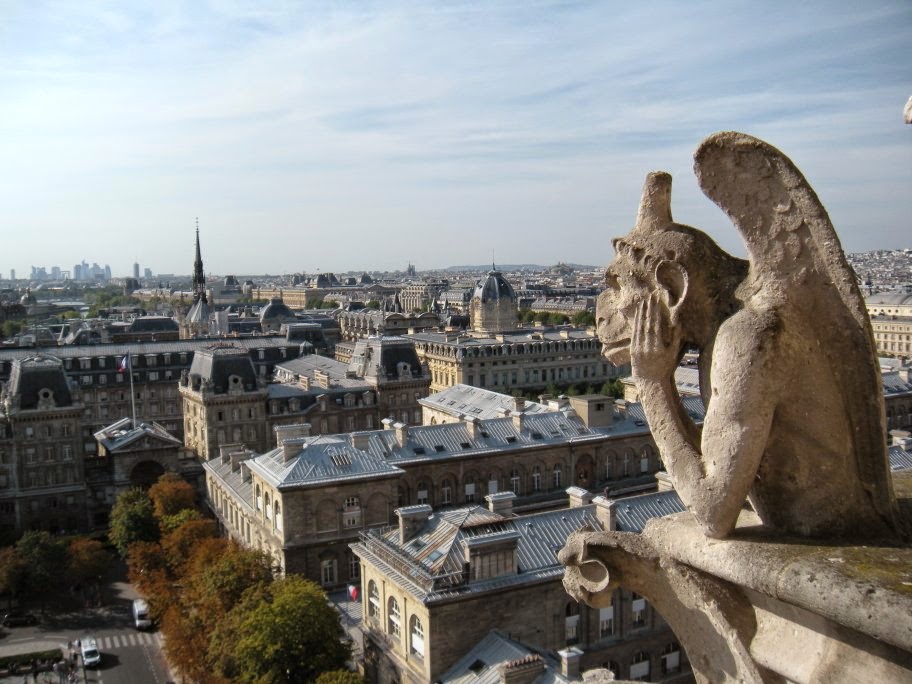
The gargoyle next to me atop Paris’ Notre Dame Cathedral bared a permanent, toothy grin. I smiled along with him, as we both gazed out at the gift spread before us: a Parisian panorama chock full of the things that embody the City of Light. There were elegant Parisian rooftops; the Eiffel Tower piercing the sky in the distance; the glistening River Seine ducking around towers, museums and teapot domes. And unassuming amongst the surrounding grandeur, was a little bookshop over on the Left Bank.

Perhaps it was due to the gargoyle next to me, or the signs I had just read about Victor Hugo, but seeing the Shakespeare & Company bookstore gave the moment an immediate air of the literary.

I had been in the bookshop earlier. The old paper musk that filled the Shakespeare & Company bookstore lingered, in a good way, much like the ghosts of famous writers that had frequented the shop. That old bookstore was graced by the likes of Walt Whitman and countless other renowned authors over the years. On the upper level, a small bed, desk, sink and typewriter still sit, free of charge for any upstart or struggling writer to utilize.

Shakespeare & Company is still visited by all kinds – from writers and book lovers, to the average tourist stopping in for a look around the tattered copies. And there are plenty, with old books stacked around the store just waiting to be thumbed through.

I heard a woman say out loud that she should purchase something for her son who liked William Shakespeare. His favorite was, “that one that starts with an ‘O.’” She must have missed the copy of Othello right in front of her, but I didn’t. To this day, few purchases I’ve ever made have given me the same amount of chills as the 100-year-old copy of Othello I snatched up that day.

A good bookstore, like Paris’ Shakespeare & Company, does so much more than sell books. A good bookstore is a meeting place, a library, a study hall and experimental laboratory for writers past, present and future. A good bookstore is an icon of a bygone era when the musty smell of old paper and leather bindings was revered.

A good bookstore is the city in which it resides.

Shakespeare & Company may be named after a British literary legend, but you know you’re in Paris when you peruse its shelves. The tomes are stacked and strewn in such a way that at first feels cluttered but upon second glance, is supremely beautiful. The antique feeling of the place is museum-like, in a way that is distinctly Parisian. Like the city itself, the shop is well-trodden and imbued with historical significance, but still distinctly intimate.  
So many local bookshops around the globe play a similar role in their own communities. They offer a glimpse into the people and history of a place through their aesthetic and ambiance, through the traditions they uphold and through the local authors they cherish.

For example, in Quebec City, Canada hockey paraphernalia filled the floor to ceiling windows of a bookstore, revealing the owner’s unsurprising love of a professional hockey team long-since moved to a warmer climate. But it revealed the city’s staunch devotion to the game, the region’s tradition and stubborn refusal to allow the memory of their team to fade.

Conversely, in Vienna, Austria a bookstore on a main pedestrian thoroughfare displayed items and books that did not shy away from history’s darker moments. Sitting in the front window, an old children’s book depicted cartoon stereotypes and offensive slurs, challenging all to confront the shadows of the region’s past while acknowledging that full progress remains a goal not yet achieved. 

A book fair in the picturesque town of St. Andrews, Scotland sprawled out across a central square, with carts and bins filled with books. I got lost among them only to find myself down a side road, standing in front of a tiny bookstore. I could barely maneuver inside with my backpack on, afraid to knock over the piles of old books. I lost track of time shuffling through the innumerable copies of old, antique books written by local Scottish writers – some well-known and some not at all.

Perhaps the bookstore that fits most perfectly into its surrounding neighborhood is San Francisco’s eclectic City Lights Bookstore. This beat poet hangout is a hip confluence of varying styles resulting from a collision of cultures, demographics and neighborhoods. I strolled around this iconic hotspot expecting Alan Ginsberg to walk in. The bookstore embodies San Francisco itself, blending history with myriad traditions in a unique, well-crafted and unforgettable concoction.

Travel and literature have been inextricably linked since the dawn of language, from Homer’s epics to Twain’s river excursions to Conrad’s journey into the heart of Africa. My own novel, Stone Angels, is in many ways a journey story: embracing the power of travel in the form of a road trip, escaping from one’s comfort zone, shrugging off the warm sweater that is our daily lives, and arriving at a new perspective. Thematically, travel is one of literature’s greatest tropes.

So it is fitting that a bookstore – more specifically, a local brick and mortar bookstore – is one of the most unique and powerful stops on any traveler’s itinerary.

Sunday, February 15, 2015

Don't pity the gargoyles


Dusk atop the Notre Dame bell tower and the river Seine makes her presence known. On the horizon she begins the charge, a silver glimmer ducking around towers and teapot domes, hidden at one curve, brazenly obvious around another.
From this vantage point, the river’s importance is obvious. It has been Paris' greatest soldier and liberating cleanser. It has been a demarcation line between left and right, Bourgeoisie and Bohemian, and a friendly landmark for many a wandering visitor. Its current is near impossible to judge, ebbing and flowing in modern times with tourism barges and Gendarmerie police boats.
In so many ways, the river is the source of the City of Light. All walks of life gather near it, over it, on it and all Parisian monuments sit back at a respectable distance. Its proletariat power is unmatched in the city limits.
And yet the Seine, filled to the banks with history, splits in deference to the island housing Paris’ most enigmatic, manmade creation – the cathedral of Notre Dame.
High atop the majestic cathedral, I stepped to the wall to gaze upon the river and the Eiffel Tower in the distance. All of Paris was spread out before me. At every angle the nooks and notches of this famous place of worship held a mysterious vibe, quirky and gothic all at once. It took me a moment to realize that the bit of macabre whimsy was emanating from the motionless figures perched out over oblivion.
The gargoyle hanging out next to me had a permanent, toothy smirk and I couldn’t help but wonder if he was laughing at how great his view was, or perhaps that the great river Seine had to bow to him and his brethren, a bunch of water-gurgling stone monkeys. I assumed it was probably a bit of both.
There was no denying that Quasimodo and his immobile buddies had themselves a prime piece of Parisian real estate. Atop the bell tower at Notre Dame, there is a jaw-dropping panorama in all directions. No matter which way you look, there exists a place, a person, or an experience that leaves you in awe.
I began to think of the string of unforgettable moments I had during my time in Paris. There were, of course, the landmarks: Eiffel Tower, The Louvre, Arc du Triomph, the list goes on.
There was, of course, the food. To this day, there has been no taste quite like munching on a fresh crepe sucre or crepe Nutella that was made in front of me by a street vendor.
And there was, of course, the history. The old paper musk that filled the Shakespeare & Company bookstore lingered, in a good way. That old bookstore was graced by the likes of Walt Whitman and countless other writers over the years. There’s even a small bed, desk, sink and typewrite upstairs free for any upstart/struggling writer to utilize. Few purchases in my life have given me the same amount of chills as the book I bought there – a copy of Shakespeare’s “Othello & Cymbeline” from the year 1900.
But for my money, nothing in Paris tops Notre Dame. 
The previous day, I went into the cathedral and toured its depths while the priest conducted a Mass in French. His voice, echoing through the hollow stone, brought such warmth that he made this massive structure feel intimate. In my gratitude, I lit a prayer candle and became part of the congregation in my own tiny, flickering way.
But it wasn’t until I spent 30 minutes in line to climb 300 stairs that I truly appreciated Notre Dame and by extension, Paris.
At the top, the best moment came when my camera battery ran out. All I could do was enjoy the view through my own eyes – unimpeded by a lens.
Victor Hugo might have wanted us to pity his humble hunchback, but me, I envy him. Not just because of the view, but because he’ll forever be in the pages of Paris. I had to leave the City of Lights six hours later on a high-speed train.
But you won’t hear any complaints out of me. I've heard the squawking paparazzi around the Mona Lisa; I’ve eaten escargot at a street cafĂ©; I've smelled fresh-baked baguettes; I’ve read a book on the lawn under the Eiffel Tower.
Up on top of the Notre Dame bell tower, I've seen a gargoyle smile at the setting sun. And if it’s good enough for the gargoyles, it’s good enough for me.

Sunday, December 29, 2013

Travel Mistletoe for Any Season: Five spots to steal a kiss


This piece appeared in the December, 2013 issue of Destinations Travel Magazine

Whether you are a legendary lothario or unlucky in love, stealing a kiss at the right moment can go a long way towards wooing your sweetheart. But the right moment has just as much to do with location as it does with romance. Sometimes snagging a quick snog starts by picking the right spot.  

During holiday season, tradition has thrown the bumbling lover a helpful assist in the form of mistletoe, those little sprigs of foliage tacked to doorjambs that demand passers-by stop for a smooch. Perhaps there aren’t too many single people finding their soulmate by getting ambushed by lip-locks anymore. Mistletoe for most may be relegated to polite, slightly embarrassing pecks on the cheek from acquaintances at holiday parties.

But that does not mean spontaneous romance is dead. On the contrary, it exists in abundance in special locations around the globe; not in a weed nailed to a doorjamb, but at fairytale castles, in aromatic gardens and atop stunning vantage points.

These are travel’s own version of mistletoe – those unexpectedly romantic spots that set the mood with inherent romanticism. And the best part is, they work all year round. Watching a sunset from a car riding on the highway is a traffic nuisance. But step onto a secluded beach, hand in hand with your significant other, and that sunset becomes the universe’s most powerful aphrodisiac.

The tradition of mistletoe began in Europe, with several origin stories bouncing around history and mythology. Fitting, then, are the countless spots around Europe that carry on this tradition of romance twelve months a year. 

It is no secret that Europe is home to some of the most romantic cities in the world. They pay homage to love in one way or another, from ruined temples dedicated to the god of love to padlocks adorning bridges in a symbol of devotion. Romance is equated with a gondola ride along a Venice canal, or a moonlight stroll along the banks of the Seine.

The clichĂ©s of love abound in Europe. But the best spots are the unexpected ones. Your significant other should be just as surprised by the place’s romantic atmosphere as he or she is with your ability to harness it.

Whether you’re looking to pop the question, spice up your honeymoon or just surprise your sweetheart, finding the perfect place is easy to do in Europe, if you know where to look. These five European destinations are a good start.

Verona

Verona, Italy is home to the most famous tale of star-crossed lovers ever written: Romeo and Juliet. The city has embraced the love by promoting several tourist locations with connections to the tale. The most well known is Juliet’s famed balcony from which she listened to Romeo sing her praises.

To get to Juliet’s balcony you squeeze through a crowded tunnel covered with love notes, mostly to the eponymous maiden. What looks like graffiti at first glance, begins to set the mood at closer look.

In the far corner of the connecting courtyard, a statue of Juliet stares demurely at the passers by, many of them copping a feel of her breast (they say it is supposed to be good luck). The petite statue stands underneath the famous balcony.

But it’s not until you enter the home and ascend the stairs toward the balcony that the scene becomes more surreal. Standing out on the balcony affords you the opportunity to recite a few poorly remembered lines from William Shakespeare’s play and spend a special, yet fleeting, moment with your special someone. But the moment is torn away after a quick snapshot and the next couple replaces you.

The real romantic spot is back before you arrived at the actual balcony. As you make your way through the house, find the windows that look down upon the courtyard and the balcony. Perhaps a touch voyeuristic, the real whimsy of this place opens up from this vantage point. Couple after couple will appear on the balcony, smiling arm in arm. From here, you can’t help but feel the love.

Fussen

The village of Fussen, Germany is home to one of the world’s most famous castles, but you may not know it. Walt Disney modeled his Cinderella Castle after the masterpiece that is Neuschwanstein Castle. King Ludwig’s summer residence is perched high up on a rocky outcrop overlooking the stunning Bavarian countryside.

Everyone dreams of a castle like this when they are young. We all wonder what it would be like to be the valiant prince or beautiful princess, living in extravagance with the royals.

But as charming as the castle itself is, with spires and towers just begging for a damsel in distress, it is not the most romantic spot in the area. As you climb up the path to the castle, keep on going right by it and trek farther to Mary’s Bridge. This skinny walkway traverses the massive gorge cutting behind the castle. From high above Neuschwanstein, the entire castle soaks up the panorama. From here, the fairytale becomes as real as it ever could, evoking your own personal “happily ever after.”

Paris

To put Paris, a city synonymous with romance, on a list of unexpectedly romantic spots would seem trite. But don’t underestimate the City of Light. Paris can still turn a few tricks, and not just at Moulin Rouge.
The Rodin Museum, dedicated to the works of French sculptor Auguste Rodin, is home to some of the most stunning and famous pieces of artwork in history. Rodin’s Gates of Hell and The Thinker rest outside in an exquisite garden. At first glance, the writhing figures on pieces like the Gates of Hell do not elicit a romantic feeling. But let the garden draw you in, with bursts of color from flowers and roses offsetting the dulled bronze worked by Rodin’s hands.

It might be the flowers, it might be the thoughtfulness of The Thinker, or it might be the entangled (mostly naked) bodies in the other sculptures, but the garden here certainly has the potential for temptation, and the opportunity for you to create your own romantic masterpiece.

Salzburg

Classical music pours from every window in Salzburg, Austria, giving everyone in the city a giddy step. Utilizing that bit of extra energy is necessary to explore this mountain town, its rows of churches, courtyards and gardens, and the looming ridge that runs like a backbone behind the old town.

Up along the ridge, the Hohensalzburg Fortress sits every bit the patriarch, hulking over the cliffside. The fortress is a symbol of strength, fortitude and stability; virtues any lover would want to embody. Not to mention, the view from up there is extraordinary. The only problem is, you can’t see the fortress itself.

A short walk along the ridge brings you to the Salzburg Museum of Modern Art, which sits just as high. The museum has a wide patio right along the cliff affording views of the river, the shining spires and, of course, the fortress off in the distance. At dusk, the sun glints off the river and ridge, imbuing the rooftops, the green turrets and the steely spires with deep amber orange. It’s enough to make you burst into you favorite Sound of Music song. A better option, though, is to steal a kiss and enjoy the breathtaking vista.

Cliffs of Moher

Danger gets the juices flowing. One step towards the edge of Ireland’s Cliffs of Moher on the western side of the country, will get your blood pumping with excitement. The thumps continue from the exquisite natural beauty before you. Emerald green grass runs to the very edge and spills over into oblivion, nothing but air between it and the sea spray crashing against the cliffs below.

Your stomach lurches as you peer over the edge; reminiscent of a similar feeling of falling – into love, perhaps? Wind gusts sling across the top of the cliffs like arrows from Cupid’s bow. The scene naturally drives people towards each other.

There is something powerful about the Cliffs of Moher, something almost mythological. Throw in the unavoidable fact that as visitors to the Emerald Isle, there’s a good chance you’ve been imbibing in a few pints of Guinness, and inhibitions may be thrown in the wind. It all adds up to a perfect and unexpected opportunity to pull your lover back from the edge and hold on tight.

The truth is, travel mistletoe can be anywhere in any season, if you take advantage of the opportunity. Many of us travel to get closer to other people around the world. Nobody ever said the person you get closest to, can’t be the one you brought with you.

Saturday, October 26, 2013

Night moves: Travel photos after dark

My five favorite structures to photograph at night. 

Just because the sun goes down, doesn't mean your camera has to go away. Night time brings out colors, light, shadows and movements impossible to capture during the day. And with modern cameras, anyone can snap clear photos after dark. 

But given the propensity for action shots to blur in low light, I find static objects to be excellent evening subjects. Not to mention, some of the most beautiful things in the world are man-made structures. And as tourist attractions go, the most popular ones around the world more than likely have already perfected the art of nighttime mood lighting. 

The Vienna Opera House was one of the most extravagant buildings I had ever seen, naturally. In a city where music and architecture move together like two ballroom dancers, there are bound to be stunning sights around every corner. When the sunlight dims and the street lights buzz on, the whole city comes erupts into new life. The Opera House is just one of the more beautiful uplit structures, almost surreal in its effervescent glow.

Vienna is not alone in its knack for nighttime sights. Visit the Harp bridge in Dublin in between pubs or grab a gellato in front of Rome's Pantheon - two well-known tourist stops that take on a whole new light after dark. Two of the most well-known buildings in the world - the Eiffel Tower and the United States Capitol building in Washington, D.C. - are prime examples of the transformative power of nighttime.

So I say get out there at night and try out some of those strange settings on your point-and-shoot or your iPhone. The night belongs to the adventurous.

Below are five of my favorite spots to snap nighttime pictures.

Statsopera, Vienna, Austria


Harp Bridge, Dublin, Ireland


U.S. Capitol, Washington, DC


The Pantheon, Rome, Italy


Eiffel Tower, Paris, France


Friday, September 13, 2013

Paris for Newbies - Guest Blog

Sometimes you’re lucky enough to have your friends fall in love with each other. Sometimes you get really lucky and they write a guest blog from their trip to Paris. Such is the case below, as Michael Corcoran and Kathleen Hoye, have provided a special post about their recent visit to the City of Light.

Mike and Kathleen, or Corcoran and Hoye as I've known them (the former for almost 20 years and the latter for more than 10), are getting married. Yup, two of my closest friends got together, slipped into that mushy place filled with unicorns, rainbows and shirtless Milan Lucic posters they call love, and are currently staring down the barrel of forever, fixing to pull the trigger in a few months.

But before any of that can happen, they embarked on the tried and true tradition of testing a relationship through international travel (whether that was their intention or not). Nothing stresses a couple more than stepping into line at a cafĂ© and not knowing how to order a cheese sandwich, or attempting to cross a street with a neverending flood of homicidal vespas. On the other hand, nothing brings a couple closer than conquering a country together. There is usually a point during the trip where one begins a sentence in a foreign language and the other finishes it - this is not simpatico, but rather an example of how each of you only knows half of how to ask where the bathroom is. Regardless, those are the moments when you realize you've made the right choice, both in companion and travel destination. From that moment on, there are no photos or trinkets that can compare to the stories you share.

When Mike and Kathleen told me they were going to Paris,  I asked if they'd be willing to put together a guest blog about their experience. Mike had never left the U.S. (save for Canada and well, that just doesn't count) and Hoye, the avid travel bug that she is, ventures around the world frequently for work and pleasure. It is an interesting combination and I was interested to see how these two travel backgrounds would meld.

I could write a weekly series about my friendship with Corcoran and Hoye, both individually and as a couple (and maybe someday I will - I could see Pulitzer in that, or perhaps a Razzie). They are two of the most passionate people I know, intelligent and eager to consume the world around them. As someone who helped push them, not so gently, towards each other a few years ago, I was eager to hear about their first international opportunity to do just that.

Merci et bonne chance!

GUEST BLOG - by Kathleen Hoye and Michael Corcoran

We both love formage, vin rouge and pain au chocolat (cheese, red wine and chocolate croissants). That’s probably why we’re getting married. We both can appreciate the simple and wonderful things in life. We realized we enjoy them more when they’re consumed in early September in Paris. No talk of wedding plans or home improvements. We acted French and sat outside for long lunches and watched the world go by (in skinny jeans).

After some consulting with our travel guru’s Rick Steve’s and one “American Husband in Paris”, we were ready for a whirlwind three days in the City of Lights. We decided that we just wanted to stay in the city proper and crossed Versailles off of our list. (We’ve been to Newport, RI and toured the Breakers. It’s just the French version, right?) We had our priorities straight and decided to focus on the fine works of art and architecture and enjoying culinary delights.

Here are the highlights:

·         Night bike tour and boat ride with Fat Tire Tours – we peddled through the city like experts as the lights came on and made the days sights glow in a whole new way http://paris.fattirebiketours.com/

·         Sainte Chapelle – pictures and postcards can’t do this place justice. It’s one of those places you just have to open your eyes, drop your jaw and try to memorize all the colors in your mind.

·         L’Orangerie Museum – better than Orsay. A great collection of Impressionist art that’s not too crowded. Huge murals of Monet’s Waterlilies make you feel like you’re not in the city, but surrounded by color’s they don’t have in the paint aisle at Home Depot.

·         Rue Cler – a great little neighborhood street where we went from formagerie to boulangerie to marchand de vin and gathered a delightful picnic in the park. It’s completely socially acceptable to drink wine straight from the bottle in a public park as long as it’s accompanied by a loaf of bread and chevre.

·         Taking it easy. No wonder the French are happy. Aside from nutella crepes, it’s expected that you will sit for lunch, eat it slowly and enjoy the company of the people sitting beside you. There is no rush. Bon appetite. (Despite our love of food, we both lost weight while in Paris as we walked everywhere and up everything.)

American observations:

·         Sushi and bagels in the same place? [insert photo]

·         We made a great effort to speak French, even though Kathleen couldn’t help but pronounce French words in Spanish (who drops the last consonant?). Our mercies, sil vou plaits and madames were plentiful and sincere. We noticed that most Americans didn’t even bother and figured out that’s why most people hate us.

·         The Americans with Disabilities Act doesn’t exist France. Come visit while you’re still able bodied. Join the gym so you can climb the 700 steps up to the second floor of the Tour Eiffel.

·         What’s with all of the Asian bride’s getting their photos taken surrounded by pigeons and tourists outside of Notre Dame?