Sunday, September 16, 2012

Images from the Emerald Isle

Ireland is a lot of things, but picturesque should be listed right at the top of the list. After only three days on the Emerald Isle, I had snapped almost 400 photos. From the witty banter in a Dublin pub to the breezy green bastion at the edge of oblivion along the Cliffs of Moher, Ireland is at a constant pose. If you're lucky enough to catch a blue sky, all the better. But a dark, haunting beauty fills the clouds along the coastline, just the same as it swirls in the clouds of a pint of Guinness. Architecture, religion, nature, culture, beer, food, history - no matter your subject preference, Ireland provides with heart and humor. See Ireland through a lens - but just don't forget to pop your head out and see it with your own eyes.
 
Here are some of my favorites.

 The Perfect Pint - Guinness Factory tasting room, Dublin

 
Irish Luck - Guinness Factory tasting room, Dublin

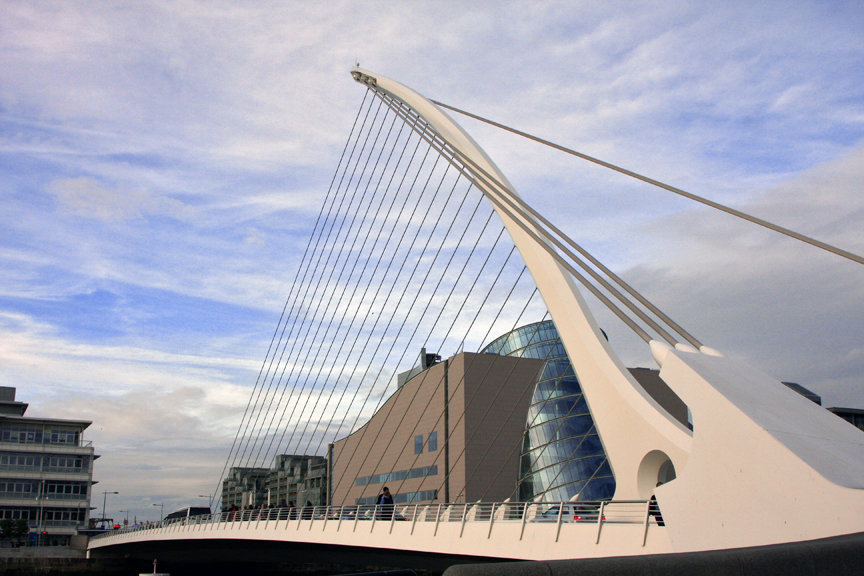
The Harp at Night - Samuel Beckett Bridge, Dublin

 
 Day Harp - Samuel Beckett Bridge, Dublin

Castle Through the Trees - Dunguire Castle, Ireland

O'Neill's Pub - Dublin, Ireland

Strength & Honor - St. Patrick's Cathedral, Dublin

At Prayer - St. Patrick's Cathedral, Dublin

Trinity College - Dublin

 The Cliffs - Cliffs of Moher, Ireland

 Castle on the Cliff - Cliffs of Moher, Ireland

Path Along Oblivion - Cliffs of Moher, Ireland

 Corcomroe Abbey - The Burren, Ireland

Tuesday, September 11, 2012

Gaining Perspective in Yosemite

Check out my latest monthly column about gaining perspective in Yosemite National Park.

Click here for story


Wherever-it-Takes-column-Gaining-perspective-in-Yosemite.jpg

Wednesday, September 5, 2012

Any Pub in Dublin


The Irish can’t stand it when you stereotype them. They know the world expects them to be Guinness-drenched, overly hospitable chatterboxes. It’s not that they take offense; they just humbly prefer you refrain from pointing out their best qualities and join in.
It doesn’t take much to feel at home in Dublin. That may be due to my Irish heritage, but more than likely not. It may be amplified a little, but certainly not exclusive. You know that annoying thing people say on March 17 every year, whether you’re in an Irish pub, a beach-side tiki bar or a techno-thumping night club: “Everyone’s Irish on St. Patty’s Day!”

That statement has much more credibility and truth to it no matter what day it is, when you’re actually in Ireland. The people there will encourage you to welcome others with open arms and chat the night away over too many pints of Guinness draught. And suddenly you’re one of them, feeling right at home embracing the Irish way.
The best way to do it? Just pick a pub. Any pub in Dublin is better than every bar in America, so you won’t go wrong with any one you choose. Or, if you’re like me, any eight you choose.
My Sunday in Dublin began quietly enough, meeting some friends for coffee and strolling around the grounds of the magnificent Trinity College. When we saw the line to see the Book of Kells stretching around the entire courtyard, our plans had to be changed. As much as I wanted to see the old library inside, I was not wasting a Dublin day in a two hour line.

Our group found itself at The Duke, a typical Irish pub serving typical food and typical beer. But typical is a compliment here because anything less or anything more would be unauthentic and out of place. In terms of time spent at pubs in Dublin, I tended to measure hours or minutes in pints. But there really can be no quantitative value assigned to a pint. The consumption rate depends on equal parts of the quality of the conversation and the heaviness of what’s inside that pint glass.

Our group - myself, my wife Danielle, our friends from London Katie and John, my college friend B.J. and a few of his family friends from home in the States – slipped into easy conversation barside at The Duke, asking the bartender about the rules for the upcoming Irish Football match and if he ever watched the NFL (no). Three pints later, Katie and John departed for the airport and the rest of us sauntered into the sunny Irish afternoon in search of a pub we’d all heard of, O’Neill’s.

After obtaining bad directions from a local (and yes, I believe this is required of every tourist in Ireland because we had been forewarned by several people, including a bus driver, that the Irish will never say they don’t know and just tell you regardless of accuracy), we spent a half hour walking in the wrong direction before turning around, retracing our steps and landing at O’Neill’s about 5 minutes from where we started.

If you can only visit one Irish pub in Dublin, snag a seat at O’Neill’s. It is not located in the famous Temple Bar area but it is on a back corner near an old church and a side street where tour buses pick up day passengers. One of O’Neill’s draws is the building itself. It is a pile of old, wooden rooms scattered on top, next to and around corners and crannies. On one trip to the bathroom we found an outside roofdeck and a set of stairs that led to a whole other hidden side of the pub. O’Neill’s seemingly just keeps going.

On this particular Sunday, the crowd was more locals than tourists due to the Irish Football semi-final championship playoff match between Dublin and Mayo. If you’ve never seen an Irish Football match, and I never had, think of a mix between soccer, rugby and felony assault. It was easy to see why the patrons at O’Neill’s clad in blue/white (Dublin) or green/red (Mayo) had more energy than a Red Sox v. Yankees playoff game. Despite being in Dublin, we found ourselves rooting for the underdog, Mayo. Dublin, we were told, is the equivalent of the New York Yankees, a powerhouse who won the championship last year but in this match was way behind early. Equal parts astounding athleticism and savage head shots, the match required several pints and caused quite a few oohs and ahs. As we left O’Neill’s, undeservingly satisfied with Mayo’s victory, I felt I could get into a sport like this.

From there we strolled through the famous and infamous Temple Bar area of the city. It is an area full of pubs and restaurants, a neighborhood for nightlife and revelry. We picked through the decorated and hopping Oliver St. John Gogarty’s, named after one of the city’s influential writers and difference-makers, before turning up to a pub called Buskars for a pint.

At this point we knew the road we were on and were willing to walk it. The only logical destination was the neighborhood’s namesake, the Temple Bar.

If O’Neill’s was a classic pub, serving classic food while cheering on a classic Irish sport, Temple Bar was its crazy, drunk uncle. The pub was jammed with people, both locals who watched the game and a deluge of tourists crammed around the musicians rattling off traditional Irish songs.

We found a tiny square of floor one layer removed from the bar and stood our ground. In a situation like this, when spillage and bumping is inevitable, the best thing to do is make friends with your neighbors. They did so for us. The two older gentlemen sitting on stools in front of us started chatting with BJ and we quickly engaged in conversation about Dublin v. Mayo (see, it helps to know what’s going on in the city you’re visiting) and anything else that came to mind. At one point my wife tried to take a picture of the massive array of bottles behind the bar, prompting the ribbing from one of the men that she was actually trying to snap a keepsake of the attractive male bartender. She assured me that wasn’t the case.

A few pints and few sing-alongs later, we left Temple Bar and a few friends behind us on our way to Finnegan’s nearby. At Finnegan’s we encountered a priest, a lawyer, a cop and a firefighter – no this is not the start to a joke. They were related, from America and of Irish heritage, of course. And coincidentally, one of them went to school with one of my wife’s best friends – Katie, who had left us a few hours before to fly home to London. The connection prompted a few pints, as it typically does, and the pints prompted a few comedic encounters with the bartender, as they typically do (we would see this group of Americans the next day on our day tour to the Cliffs of Moher, realizing the “small world” theory to its fullest).

Finnegan’s thinned the herd. Myself, my wife and B.J. were the only soldiers left standing. But the night was far from over. We decided to take an unknown route home and in doing so, stumbled, literally, on a bar B.J. had been looking for since his arrival on the Emerald Isle. The Stag’s Head, with its comedy club in the basement, made for the perfect last stop to our evening. We grabbed three seats at the bar, chatted up our bartender Neal and settled in for a few pints of Guinness. Neal convinced my wife, who had said she was done for the night, to have just one more, “wee pint.” Just cursed him, as she took the half glass from him.

“This is all your fault, Neal,” she said, along with a few choice and inappropriate curse words.

All Neal could do was laugh and say that she was not the first woman to say that to him, so he was alright with it.

We left Neal and the Stag’s Head out the door we entered, onto the cobbled back street intersection that acted more like a courtyard than traffic stop. As we departed the pub, we passed through a large crowd immediately outside the door. They were locals, some were sitting, some standing, all were singing, yelling, chatting and all were around the age of 60. I knew that because of the birthday cake on the overturned wooden barrel in the middle of the street.

“Happy birthday!” I yelled and got a raucous cheer in return.

“Want some cake?” And suddenly we were part of the family. I spent an hour talking to a man named Paul, or Peter, I’m not sure. It was late and as good as Guinness is, I don’t think it helps increase your memory. He lives in France, from Ireland of course, but sent seven years living in Somerville, Massachusetts. When he told me what street, I knew exactly where his house was. This small world thing was starting to scare me.

Regrettably, we departed from our newfound friends. With pubs shuttering their windows, it became apparent the night had finally come to an end. I had drank, hugged and chatted my way across greater Dublin, in a fashion some people would consider wasteful or crass. I consider it getting to know the city, the people, the culture and their delicious birthday cakes.

If you were counting, I referenced only seven pubs. There was an eighth somewhere in there. I’m sure of it. We counted on the walk home that night, wrote down “8” and fell asleep. But for the life of me, my wife or our friends, we cannot remember the name of the eighth pub. Quite frankly, it doesn’t matter. It simply reaffirms my belief that any pub in Ireland is better than any bar anywhere else.


Wednesday, August 8, 2012

All This History - July Travel Column

A Yeoman Warder walks into a bar . . . history is a joke (in a good way) at the Tower in London, and all along the Thames.

Check out my latest travel column in the Saugus Advertiser about how London strings together bits of history with a smile, a laugh and few surprises.

http://www.wickedlocal.com/saugus/news/lifestyle/columnists/x769535439/Wherever-it-Takes-column-All-this-history-in-London#axzz230rwoxDN


Monday, July 30, 2012

Flying the Colors

Almost ever lasting Olympic image includes an athlete draped in their respective nation's flag. The 2012 London Olympic games will be no different, starting with the Opening Ceremony scene of a hill covered in every country's colors.

In honor of the 30th Olympiad, I've included some of my favorite photos of flags (or flag-related paraphernalia) from around the world. These next two weeks are meant for international camaraderie - but let's face it, they're also meant for unadulterated patriotism.

Patriotic dude, Jefferson Memorial, Washington, D.C.


Paris, France


Jungrfau, Switzerland


Buckingham Palace, London, UK


Quebec City, Canada


St. Michael's, Maryland, USA


Friday, July 27, 2012

Q&A with Me!

Literary Traveler did a Q&A with me in response to my piece, "I am not an original groundling," which they published last week at www.literarytraveler.com.

Check out the full Q&A here: http://www.literarytraveler.net/blog/2012/07/behind-the-article-shakespeares-globe-theatre-and-the-groundling-experience/

Thanks Literary Traveler for the opportunity to print my piece and the follow-up interview!


Monday, July 23, 2012

Literary Traveler piece - "I am not an original groundling"

Check out my latest published piece in Literary Traveler about a visit to Shakespeare's Globe Theater and what it must have been like to be a Groundling, the front row spectators that drank and heckled their way into infamy.

http://www.literarytraveler.com/articles/i-am-not-an-original-groundling-shakespeares-globe-theatre/


I am Not an Original Groundling

photo by www.fatturtletravel.comBy Michael Hartigan
I am not an original Groundling. Nor could I ever be, what with widespread theatrical ambivalence, modern day health codes and a personal dislike for sloshing through human waste.
However, had I been a child of the 60s (the 1560s), I might’ve felt right at home on the wrong side of the Thames, amongst the bawdy bards and applauding proletariat. Right there, on the floor, standing room only at Shakespeare’s Globe, ankle deep in mud, stale ale and whatever that steaming liquid over there in the corner might be – reveling in revelry with a raucous reaction to sword fights and swooning ladies (well, men dressed like ladies) all the same.
These are the cheap seats, the Elizabethan equivalent of the Wrigley bleachers during a mid-summer weekend day game – with more beer. Here on the theater’s ground, directly in front of the stage, apprentices skipped out on their masters to pack the floor and interact with the actors. They were loud, rambunctious and if their nickname, “stinkards,” doesn’t describe them fully enough for you, just know that a trip to the loo meant aiming in between your shoes.
But what the cheap seats during Elizabethan times lacked in hygiene (and they lacked a lot, including any actual seats or any actual hygiene), they made up for in sheer entertainment value. You were part of the production. The sweat on Shylock’s brow as Portia argues his punishment must have dropped right at your poorly shod feet.
True, to stand at the foot of the stage meant to be in prime trampling range should an errant spark find its way onto the thatched roof. But the play was the thing, ensnaring the attention of everyone from commoner to king. For what equaled out to ten percent of your day’s pay, a bit of entertainment was worth the risk and the aroma, which may have been just as deadly.
The Shakespeare’s Globe Theatre you visit in London, England, today is a reconstruction. The original, lost to fire like most of London at one point or another, was located nearby the site of its modern day doppelganger. Like my ability to be a true groundling, the modern Globe is not, nor could it ever be an original. But barring a trip to Stratford-Upon-Avon, it provides one of the area’s best Shakespeare-o-phile indulgences.
With its open-air theater style, the play season does not start until mid-April. I visited too early in the year to enjoy a show, settling for a guided tour. Clad in scarf and fingerless gloves, our guide led us around the balcony, through the corridors and out onto the floor, all the while his voice fully ingrained in gravitas, doing his best to fill the void where the play should be.
The history was fascinating, as were the tidbits about royalty’s penchant for sitting onstage and other behind the scenes Elizabethan gossip. Standing in the dirt at the foot of the stage, the groundling experience could be imagined, if not fully realized.
Although an exact replica of the original, the modern builders did made a point to include indoor plumbing in this century’s Globe Theater. A knock to the philosophy of the original groundlings, but nonetheless mandated by building codes and common decency. I broke away from the crowd to find one of these little bard’s rooms and returned henceforth to find the group seated on wooden benches in another staging area near the gift shop (another modern addition).
As I descended the stairway into the waiting area the small crowd all turned to stare–all save my wife, who was standing in front of everyone  like a frightened actress. My wife was accompanied by a young woman, an older gentleman and two racks of traditional Elizabethan garb, including dresses, surcoats and vibrant doublets, white leggings and an assortment of hats hung, trembling in wait.
I cursed not so subtly under my breath. There was an ambush coming, scheming to dress me up and parade my be-knickered arse in front of international tourists. Why did I open my big mouth and ask the tour guide a question?
With every step toward the group I tried to convince myself it would be fun. I could pull off tights and a feathered cap, right? Maybe they’d give me a sword. That would make it swashbuckling and masculine, right?
As I did my best to hide my oncoming embarrassment, my wife’s face turned as red as the deep scarlet dress hanging behind her–turns out I was not the star of this show.
She flicked her hand timidly, as if shooing away a fly, toward one of the benches right up front. The groundling section.
The young woman announced she and the older gentleman would be dressing my wife up in the traditional clothing of Ophelia, an Elizabethan royal (albeit Hamlet wasn’t British but they wore the British clothes on the stage. You get the idea). It was not the marquee production but as a matinee, this had the makings of a hit.
In the cheapest of seats with the closest of views, I witnessed a transformation from embarrassed modern woman to embarrassed Elizabethan era British lady. She donned a white linen undergarment that looked more bedsheet than bra. The corset came next, laced up fully in the back until everything in front was elevated, squeezed and popping. To make her rear more ample, they inserted a “bump.” Elizabethans liked a little junk in their trunks and the crescent pillow gave all the inflation one could ask for. They finished the beautiful crimson dress with an ivory jacket, laden with jewels and delicate stitching. And topped it all off with a bonnet.
Perhaps I should’ve been more true to the groundling form and heckled her–also, a pint of ale would have been welcomed– but something wholly Shakespearian clamped my voice. My wife sacrificed some of her dignity and probably a few pounds by dressing up in hot, heavy and heaving period attire at the Globe, and I appreciated it.
For all their tomfoolery and mudslinging – literal and figurative – the groundlings understood undertone. Shakespeare wrote for the people; even when he was writing for royalty he include the subtle commoner lingo usually reserved for farmers and flock herds. Billy and his minions would’ve appreciated this scene, for all its skewering of humility, tugging of romantic souls, ironic reversal of perceived roles and just plain comedic value. (She did look like a serving wench.)
So while I didn’t get the full groundling experience–no play, no mud, no free-flowing insults, ale or urine–I thoroughly enjoyed the show.
*
For more information on Michael Hartigan’s groundling experience, read Literary Traveler’s accompanying interview with the author and take a look “behind the article.”

Sunday, July 22, 2012

WiTList - War Destinations


In Massachusetts we are taught from an early age that we are lucky enough to live in a place that gave birth to America. It is no doubt that most of our best tourist spots revolve around Revolutionary War history and the people who fought to found our nation. From Paul Revere to John Hancock, their names are legendary and the occurrences have become lore.

Destinations of significant moments in war require delicate balance between information and entertainment. How do you make visitors enjoy a visit to a place where hundreds or thousands of men were slaughtered? How can someone understand the weight of a patch of grass, overgrown over time? What do you want visitors to tell people back home when they’re asked, ‘how was your trip?’” The answers at a killing field or a concentration camp are not always attainable.

But regardless of solemnity, the impact a war-related destination can have is different for everyone, sometimes immeasurable.

I left the Dachau concentration camp in a haze, having stood in front of ovens used to burn thousands of human corpses. But on the grounds, there were other young people laughing, joking, apparently immune to the emotion behind the barbed wire.

The experiences are more personal, and that is where war destinations truly hold their travel lure. The locations on this list are not museums or memorials (although some have them on the grounds). These are locations where significant events in wartime occurred. The sites have been preserved, rebuilt, or in some cases destroyed, in order to show the world the events that made them significant.

My reaction when people ask me about what visiting these places is like, typically goes something like this: “It was emotional.”

But we don’t travel to take photos. Or even to get fodder to write stories. We travel to have experiences, and emotional experiences are usually the ones we remember the longest.


1. Antietam Battlefield - Sharpsburg, Maryland (American Civil War)


Located in the Hallowed Ground of Maryland’s most visited Civil War region, the Antietam Battlefield is awe-inspiring because of its sheer size. The location was considered the bloodiest battle of the American Civil War and as you drive around the battlefield (yes, drive because it is so large), you begin to imagine holding a line or retreating to the tree line. 

At the Sunken Road, or what is also called “Bloody Lane,” a very knowledgeable guide described the view Confederate soldiers had from one side of the gulley. Union bayonets were hidden due to the contour of the land until they marched up over a ridge and into the field across the Sunken Road. The fighting there was ravenous, Union soldiers broke the line and ultimately no ground was gained by either side. 

Antietam is full of stories and spots like this. Bridges, fields, overlooks, are all dotted with canons and hundreds of metal signs that tell the tales of skirmishes and soldiers, no matter what rank or side they fought on. One of the most impressive aspects of Antietam is its ability to provide unbiased information, giving information on fighters from both sides with unwavering respect.


2. Dachau Concentration Camp - outside of Munich, Germany (World War II)

The solemnity of a visit to Dachau may not strike the average tourist as a fun way to spend your afternoon in southern Germany. There are, of course, so many beer halls and Bavarian castles awaiting your arrival with open arms and empty steins. But the thoughtful traveler will go and be struck by the power in a few photographs, or a small concrete room, or a twisting rusty barb-wire gate, or a long row of poplar trees.


There is meaning here and no one person can tell another how or where to find it. The gate through which you enter reminds you, “work will make you free" and the inscribed stone above a tomb of unknown prisoner ashes says, “Never Again.” Cause and effect personified. But some things pluck different strings on every heart. I watched a young Italian woman in a tour group become overwhelmed and not be able to look into the cremation ovens.

The museum here provides a long, informative timeline of Dachau and Nazi concentration camps during World War II. There is more information here than one visit can handle, in my opinion, which is not a bad thing. Choose a few aspects and immerse yourself into them; get a rounded understanding of what you're experiencing. 

But the real power of Dachau is not in the museum but rather in the stark, open gravel-covered grounds.  A lot is said with so much open space; it makes the structures and sculptures that much more potent. To walk the paths at Dachau, where so many bare and broken feet had trod without hope, is to support the purpose of the site's continued, post-war existence - to remember and, as the memorial on the grounds says, to "Never Forget."


3. Minute Man National Historic Park & Battlefields - Lexington & Concord, Massachusetts (American Revolution)

April 19, 1775: British soldiers clash with colonial militia and the American Revolution begins in earnest. Ralph Waldo Emerson’s phrase, “the shot heard round the world,” may eloquently reflect the historic and worldly significance of this event, but a trip to Minute Man National Park will do more.

Located in a beautiful wooded area, this is the home to the famous Minute Man statue, a symbol of Massachusetts, and the North Bridge, where much of the fighting on that day back 1775 took place. Houses on the grounds, called “witness houses” were actually there during the time of the battle and serve as strong symbols of the independence and freedom that was culled from that day.

Lest you forget, take a walk to the grave of the British soldiers – an actual burial site. The men buried there fought just as bravely in the name of duty as their American counterparts, and this show of respect reflects the spirit of Minute Man.   

For more info, visit here: http://www.nps.gov/mima/index.htm


4. St. Paul’s Cathedral - London, UK (World War II)

There are many reasons to visit St. Paul’s Cathedral in London, not the least of which is its stunning architecture and grand size. But once you wade through the significant British history built into its foundations, pay close attention to the stories from World War II. 

The Nazi’s Blitz on London was a time of hellish destruction and fear. But as Churchill denounced Hitler and encouraged Brits to continue defying evil, the city burned at all corners. Throughout the attack, people were stationed on the dome of St. Paul’s as lookouts, risking life and limb atop one of London’s most recognizable buildings.

The cathedral was targeted several times, including the night of December 29, 1940. The night included intense bombings across the city, with heavy concentration on St. Paul’s and surrounding areas. The cathedral was hit by multiple strikes, bombs pierced the iconic dome and fire raged inside. Molten leads dripped from above and the entire building appeared lost. But the determined fireman and volunteers brought St. Paul’s under control. When Londoners awoke the next morning, terrified, frantic and exhausted, the dome of St. Paul’s remained steadfast and erect amongst the rubble.

The image became a lasting symbol of British resilience throughout the war and a visit here will inspire as much as overwhelm.


5. Les Invalides - Paris, France (French Revolution)

I know I said that I was not going to include locations on this list that were primarily museums. Les Invalides in Paris is home the Army Museum and multiple other military-related venues, making it seem as though I went against my word above.

However, I include Les Invalides on this list for two reasons: because of what it used to house and because of who it houses now.

Les Invalides was, in its heyday, an armory. On the night French Revolutionaries stormed the Bastille, they first stormed this facility. They took from it ammunition and weapons used later to storm the Bastille and erupt the French Revolution into full-blown, bloody conflict. It’s historical and military significance, which you will learn over and over with a visit, is unrivaled. Make all the jokes you want about the French Military, this is still some good history here.


But Les Invalides is also significant because of its most famous resident: Napolean Bonapart. His tomb is located in the central rotunda and is impossible to miss. In stark contrast to his shortened stature, this historic legend is laid to rest in an enormous wooden ark of a tomb. It can be viewed both from above and from the ground floor, making Napolean’s final resting place an awe-inspiring symbol of dominance.


Do you have any favorite war-related destinations? Post them here in the comments section or on Twitter @WhereverItTakes 

Monday, July 2, 2012

America the Beautiful

America has exposed the world to a cadre of carping TV Housewives, the Dorito taco shell, a fried chicken sandwich with no bread just extra fried chicken and the acting career of Nicholas Cage. We sincerely apologize for that last one and won't let it happen again. 

Fortunately, this great land has so much more to offer visitors than just trans-fats and overacting. From the majestic mountains of Yosemite to the cool breezes of the Chesapeake Bay, from the bustle of Times Square to the buzz of a good old-fashioned rock show, there is more to experience than I have space to write about.

Instead, in honor of this week's July 4th celebration, I'm wearing my patriotism on my sleeve via virtual visual aid. There are certain symbols of America that remind me of all the great things we bring to the table. Baseball and apple pie are great, but I'd prefer a beat up old Chevy and a 19th Century war ship any day. 

Here are a few of my photos that stand out as American symbols. Some are natural wonders, like the moonscape Badlands of South Dakota or Wyoming's big sky country. And others are more personal, like a rock and roll show on a boat off of New York, a ride on an old-timey ferris wheel or an up close encounter with a buffalo. All are made in the U.S.A. and none of them were featured in Ghost Rider.

(Add your favorite U.S. photos in the comment section below!)


Sailing the Chesapeake - Maryland

Stormy Times Square - NYC

Cherry Blossoms - Washington, D.C.


Key West Sunset - Florida

The Mighty Half Dome - Yosemite, CA


Big Sky Country - Wyoming

Rock & Roll with Roger Clyne - concert on a boat off Manhattan, NYC

The Badlands - South Dakota (that's me up on the ridge)

Steadfast Chevy - Turquoise Trail, New Mexico

Navy Pier Carnival - Chicago, IL

Buffalo! - South Dakota

Old Ironsides - Boston, MA

Portland Head Lighthouse - Cape Elizabeth, Maine