Sunday, October 28, 2012

Stop the CT drive-by


No doubt, New England has a lot to offer. Vermont has its mountains (green); New Hampshire has its mountains (white); Maine is Vacationland or the Way Life Should Be or whatever moniker they’ve assumed this week; Lil’ Rhodey packs a punch in a small package with beaches and mansions; and Massachusetts plays the field from Boston to the Berkshires.

Then there’s Connecticut. I’ll be honest, they sometimes get a bad rap in the eyes of other New Englanders.

When not stopping at the state’s two popular casinos, other New Englanders see not much more of CT than the green line on their GPS. It is the meatiest portion en route from Boston to New York and points south; New England’s southwestern, shortcut connector. Think I’m exaggerating? Even the name says so (go ahead, look). Sure the rolling hills are nice, but route 84 or route 91, it doesn’t matter, it’s still a highway. Connecticut is part of the journey, not the destination. 

Connecticut lies there in limbo, perceived as the least convivial of the New England states due to ambiguous sports affiliations and commuter preferences. There are those in the Portland/Boston/Providence corridor willing to relinquish the boxy state to New York, giving full domain to the Yankees, Jets and Giants. Part of the state cheers against the Sox and Pats anyway, why not let them embrace their Tri-State roots? NYC can have the Nutmeg State (nutmeg, really? You nicknamed your state after shaved tree bark excessively used by television chefs?).

On Atlantic Coast road trips, drivers commonly and rightfully plan routes with New York City in mind. But going north, when you exhale after escaping Manhattan, the common phrase is then, “ugh, we still have a few hours through Connecticut.” If you don’t think of this as that bad, compare it to the southbound equivalent: “ugh, we still have a few hours through New Jersey.”

As a Massachusetts native, I have plenty to brag about. Whatever you think of my state, there’s no doubt you’ll ever be bored there or just zip through without opportunity to enjoy something that represents us. But it seems that whenever someone mentions pausing to look around CT, it’s because of family, gambling or a pizza place featured in a bad 80s movie. 

But we have it all wrong.

I am here to defend my many friends from Connecticut. After all, they’re exceptionally wonderful people and someone needs to throw them a bone.

There is much more to Connecticut than I will even hint about here. I only spent about 36 hours within its boundaries. But the realization I had was much more powerful than the actual scenery, which was surprisingly beautiful. The Nutmeg State has some wonderful treasures and deserves a closer look.

We must end the CT drive-by!

Ironically, my stomach is actually what opened up the door to Nutmeg State’s brave new world. And as much as I criticize their schizophrenic regional affiliation, I came to realize Connecticut’s beauty lies in how it represents the best of what the Northeast has to offer. 

Off of Route 84 in a town called Vernon is Rein’s Deli, a traditional New York style deli serving massive triple-deckers, Reubens and rye. They start you with a bowl of pickles instead of a basket of bread – naturally. My pastrami, corned beef and swiss was stacked high with quality meat and a welcomed amount of cheese. It was what a deli sandwich should be, something rarely found outside of New York City. The campy, touristy feel of the large restaurant actually felt right for its location; what a NY deli would be, if they had the space.

To wash it all down – albeit a couple hours later – City Steam Brewery in downtown Hartford was reminiscent of the microbreweries scattered across Vermont, Massachusetts and Maine. Like Shipyard or Boston Beerworks, City Steam offers pub food as an aside to its fermented main attraction. With a live band strumming away in the corner, we snatched a spot at the bar and soaked in the scene, complete with rowdy revelers and giant metallic brewing equipment.

I indulged in the seasonal brew, an Oktoberfest that rivaled many of the more well-known iterations of its kind. The Naughty Nurse Amber finished smooth, fruity, spicy and hoppy all at the same time. It was a complex and tasty beer, no question as to why it’s their bestseller.

But the most amazing amber color I saw was not in a glass. I set out in the morning on a drive through suburbia, determined for discovery. The morning was hiding behind a thing veil of fog. As it lifted along the back roads of towns like Farmington and Avon, Connecticut exploded in an autumnal rainbow the likes of which I had never seen.

Not in the Green or White Mountains, the Berkshires or lakes of Maine had I ever seen fall foliage as beautiful and vibrant as the foliage revealed in rural Connecticut. Bright oranges, reds, yellows, purples flowed past my car as I zipped by farmland and golf courses. Looking out over the hills, the copper-colored blanket rippled to the horizon, dappled with greens and yellows.

Hints of New York and the other New England states converge into Connecticut's own unique amalgamation. The state merits a closer look, one that will be familiar to many visitors one way or another. Make Connecticut a destination and not just part of the journey. Stop the CT drive-by. Instead, stop and look around. 

You’ll be glad you did. Food, beer and beauty –what else do you need?

Tuesday, October 16, 2012

Just Jump!


Hiking Maryland’s Catoctin Mountain

Standing at the edge of Chimney Rock, high above the emerald-green swoops and rises of Maryland's Catoctin Mountain National Park, the only thought scrolling through my mind was, "jump!"

Lush, hardwood forest raced in every direction. The deep green waves rolled toward the horizon and were pockmarked only by a few aerie outcrops similar to the one on which I currently stood. Atop this crag, one of many located in this small grouping of mountains that make up a sort of Appalachian range offspring in northwestern Maryland, the sun shone in a clear blue sky and the land fed my eyes with overwhelming generosity.

But despite the extraordinary view, that nagging feeling just wouldn't go away. It was that familiar, strange lurch you get in your stomach on the timorous approach toward a sheer drop. You know the feeling; we all get it. It is simultaneously thrilling and terrifying. You get it on bridges, tall building balconies, and double black diamond trails. And mountain tops, of course. At a base level, it is far from masochistic. In fact, it is more pride than suicide; an internal jab that taunts Death, “nah nah, nah nah you can’t get me.”

Still, at Chimney Rock, I really wanted to jump.

Immediately in front of me a crevasse carved down into the mountain range. It was shallow enough to see the forest floor but deep enough to end the life of some poor soul with an unfortunate foothold.

The masochistic pride slid over into foolish courage, I took a half step backward, inhaled and lunged forward in oblivion.

Before I could close my eyes, my left foot touched solid ground. The right foot immediately after. I steadied myself and glanced over my shoulder. What was a gorge three seconds before, was now just a two and a half foot crack. Granted, a crack that plunged 30 or more feet to the jagged mountain slope below. But hindsight is a great confidence booster.

Over on the side where I started was where the hiking trail emptied out onto a grouping of terraced rocks that clung to the mainland mountainside. They stepped down towards the crack, like a natural, uneven staircase. There were stunning views of the mountain range but I knew the full effect was waiting atop the rocky island rising high above the forest floor.

To be fair, especially to the teenager nearby who was jumping airily from one side to the other and scampering over the cliff edges like a caffeinated, daredevil squirrel, I had taken the easy way over. I lunged over the crack onto a wide-open platform walled by a six-foot high ledge, marred with handholds for easy grasping. But further up where the crack was a little smaller, was a deep scar that shot down the side of the island. Braver folks than I – and by braver I mean dumber and by folks I mean the teenager – had reached across, gripped the inside of the crack, pulled their body over the gap and wedged up the scar.

Good for him. I was over too and I didn’t need the blind invincibility of youth to get there.

Despite my pride and sense of accomplishment at taking a giant step over a moderately scary hole, I was only on the first tier of Chimney Rock. So I gripped the ledge and hoisted myself up to the top of the island.

I got my foothold on the reddish-pink rock and when I rose, opened my eyes to an unrivaled panorama.

The world fell away from every side of my rocky pillar, collapsing into emerald hues that swept off undulating to the horizon.

I crept out to the furthest point and looked down at the top of a tree. Prudence bade me sit.

Coupled with a blue sky and sunshine, the spot reminded me of the great mountains far west of there in places like Yosemite or Colorado. Smaller, of course, without that sweeping grandeur, and yet a whole lot more attainable. Catoctin’s size is an asset; it’s location a pleasant surprise.

Earlier, the hike up was somewhat taxing, uphill with a fair amount of switchbacks. But it was quick, well maintained and not crowded. The National Park Service website claims it is the most strenuous hike in the park due to the steepness, but I’d mark it as an overall moderate 3. 8 mile roundtrip loop. A few different trailheads start from various locales, making Chimney Rock a manageable two hour hike to its peak elevation of 1419 feet.

I had started on the Wolf Rock / Chimney Rock Loop from the Catoctin Visitors Center. From there, it was 1.8 miles up to Wolf Rock, the lesser attraction along this woodland carnival route. A half mile later, the trail dumped out at Chimney Rock. 

Many visitors to Baltimore or Washington, D.C. rarely venture far from the Inner Harbor or National Mall. But this upper corner of Maryland was offering more stunning sights than either city.

And history, of course, is not far from anywhere in this region. As I sat on my perch, I began to wonder if I might catch a glimpse of the Leader of the Free World. Camp David, the Presidential retreat, is located in Catoctin Mountain National Park. The location of high-powered secret meetings, peace accords and tales around the campfire with world leaders was somewhere below me, hidden in the labyrinth of trees that crawled up hillsides and down into valleys. Who knows, maybe Obama, Putin and Netanyahu were roasting marshmallows and singing Kumbaya?

International politics aside, there really is nothing like clean air and a mountain top view to erase your mind to the point of ease. For a few blissful minutes, I sat atop Chimney Rock thinking of nothing. No feelings but a warm draft caressing the edge of the outcrop.

The calm was broke by an enormous bird that launched up from the trees countless miles away. It caught an updraft and soared to the clouds, which, for me, seemed just barely out of reach. It was too far away for me to tell what kind of bird it was.

Nevertheless, I was a bit envious while I watched him fly. In a few moments, I could use a pair of wings. That terrifying thrill was returning to my stomach. I still had to get back to the other side. But this time, I wasn’t nearly so eager to jump.

 For more on hiking to Chimney Rock in the Catoctin Mountain National Park, go to http://www.nps.gov/cato/planyourvisit/upload/ChimneyRockloop.pdf


Sunday, October 14, 2012

Walking the course - A day on foot in St. Andrews, Scotland


Head over to the official St. Andrews, Scotland tourism website to check out my article about the historic day I spent walking around the seaside town.

http://blog.standrews.co.uk/2012/10/walking-the-course-a-day-on-foot-in-st-andrews/

Or check out the full text from the I Love St. Andrews website:


WALKING THE COURSE – A DAY ON FOOT IN ST. ANDREWS

12 OCTOBER 2012 
Michael Hartigan
Michael Hartigan is a freelance travel writer from Boston, Massachusetts, USA. From San Francisco to Scotland, he has explored and written about unique people, places and traditions around the world. Michael’s writing has been featured in the Arizona Republic newspaper, Literary Traveler magazine, USA Today and in his monthly travel column published in a series of local Massachusetts newspapers. He believes that you should go wherever it takes, but always come back with a good story. Follow his blog at www.whereverittakes.com and on Twitter @WhereverItTakes


I had been walking all day and yet I envied the four people strolling toward me.
There was a husband and wife, their grown son and his grandfather – three generations of one family, chatting and laughing as they sauntered down the low-cropped stretch of grass. One by one, each broke off and headed in a different direction. Then under the gaze of me and a dozen other onlookers, they made their final approach to the 18th green of St. Andrews Old Course.
They converged again near the pin. The son complimented his mother, who was closest to the hole. The grandfather took a turn with each giving his advice on the ball’s lie. Mom knocked hers in and got out of the way. Son and then dad finished up easily as well.
Grandpa went last, more out of deference than out of any time-honored rules of the game. He knocked in his ball with an effortless stroke, to the great applause of the spectators around me up along the terrace rail. He looked up apparently unaware people were watching, a wide smile emerged and he tipped his hat to the crowd.
The grandson scooped the ball out of the hole and placed it in his grandfather’s hand.
“I’m so glad we finally got over here to do this, Grandpa,” he said in his very American voice.
“Me too,” the grandfather said. “Better than I imagined. This was one for the history book.”
The family sauntered off the 18th green, mom and dad arm-in-arm, junior at their side laughing with his grandfather. Their caddies followed at a professional distance, respecting the moment as much for its individual athletic achievement as for its significance to this family.
The American family moved on, already recounting with excitement their unforgettable day on the links and leaving it to the next foursome teeing of in the distance. I envied them, getting to walk the course in the footsteps of golf’s greats. It was easy to see why the experience was so special, when you can add your own bit of history to an iconic world landmark. And how this iconic landmark adds to your own personal history.

But I had spent the previous few hours doing something similar and suddenly I realized that’s the thing about St. Andrews – not just the golf course but also the entire town itself. Here you don’t just walk past history, you step right into it.
A few hours prior, I was on the other side of St. Andrews, a couple miles and a few thousand years away starting my day on foot in this seaside town.
I’m not one to plan a route and if I do it is spotty at best. So I looked at a map and thought I would try to trek in something of a circle; I’d use the natural shape of the town to bring me to its landmarks and back again.
I debated my strategy over breakfast at Mitchell’s Deli on Market Street, one the three main thoroughfares running through the heart of the town. As I sipped a perfectly made cappuccino and fueled up with soft-boiled eggs and “buttered soldiers” (toast strips), I made the decision to stick with my original plan, which was that I had no plan, just a sense of direction. And that had already gotten me to Mitchell’s, so it was working so far.
I knew my next move was heading to the sea. I did not anticipate the wonder at its edge.
In Europe cathedrals are as plentiful as stripes on a tartan. Some are opulent and massive, others the site of major historical happenings. But none can place you in the midst of its time period as well as one with no roof.
The ruins of St. Andrews Cathedral soared into a clear blue sky and I found the reason I came here: to experience Scotland, not just to see it. I knew in Scotland I would be able to walk through and over ruins and castles and churches. But I never expected to have such a vivid reaction to touching stone and walking in the shadow of crumbing walls.

In front of me was the west front entrance, a massive pointed arch that builds upon itself into a series of arches. Above it the left side of the cathedral front was falling away broken, while the right remained stubborn and erect, maintaining the integrity of some of the arches, the height and the swooping mason work that made this building magnificent.
 
I walked down the path, through the stone portal and into the now open-air nave. The bases of the cathedral’s original columns still sat sturdy in their spot. The stone south wall on the right rose into pointed arch windows.

My mind began to fit the remains with what might have been. I was able to recreate the structure in my mind and because of that, it became more real than just listening to some audio guide or looking in some pamphlet.
I walked down the aisle, now covered in grass, toward the far end where a double-spired wall still reached up like arms to heaven.
The small markers scattered around gave me enough information to piece together why this was the most important church in Scotland.
The accessibility was what helped me place myself literally in spots where history unfolded, more so than in any other historic or religious landmark I had ever seen. To touch and walk amongst the ruins, as opposed to obeying velvet ropes and curators, makes you a part of the place, rather than just a visitor.
I spent over an hour walking through the ruined cathedral, the abbey and the substantial graveyard that is home to some elaborate graves and stonework. The entire site had an eerie, unique beauty that begged reverence.
 
I found myself wandering through the monastic walls toward the water and within minutes was walking past the small remains of St. Mary’s Chapel. I headed for the breaker wall jutting out into the water, framing East Sands and promising me a different view of St. Andrews.
From the point of the breaker wall I turned to take in the spectacular sight of the cathedral’s crumbing skyline, with the roofs of St. Andrews popping beyond and St. Andrews Caste standing guard castle further up the shoreline.
A few more information signs led me back up to the cliff walk, providing excellent historical information and grounding this whimsical seaside locale in fact. I stopped at a street vendor selling local mussels cooked-to-order in creamy broth from his green cart right along the cliff walk. The waves crashed behind him and I enjoyed the best yet simplest meal I had in Scotland.
Hunger gone, I took my time ambling along the cliff walk, to the castle that stood as a broken stone sentinel above the sea. Before entering I stood on a marker in the road where a man was executed and looked down upon the ruins of the man-made sea pool where the upper class played.
Further along the walk became a road – The Scores – and spread out into the lower campus of St. Andrews University.
Lavish buildings with flowers popping in color dotted the coastline and I stopped once or twice to peek into a garden or investigate a University building. The cathedral and castle had dropped me into a medieval daydream, where bishops and kings struggle for power inside great stone structures by the sea. But this road dragged me forward through time with every step.
I emerged with the golf course on my left, the beach on my right. I continued down to West Sands.
Just like the breaker wall, being out on the beach showed a different angle of the town. Unlike the breaker wall, I enjoyed this view with my toes curled up in the soft sand. It didn’t take much for the iconic movie music associated with the spot to start chiming in my head, especially after a group of school children ran past at top speed.
I made the sensible choice not to drop everything and jog giddily along with them, humming the tune in stride. Don’t think I didn’t want to. Sitting in the sand, munching on some snacks from my backpack was enough for me, though.
 
Rounding back I exited the sand and followed the walkway along the golf course. After a stop at the clubhouse, I found myself in the middle of the hilly putting greens.
A golf ball skittered down from the grass across my path. I debated stopping it but golf etiquette stayed my foot.
“You could’ve helped me out,” yelled a woman from ten yards away. She was holding her putter like a war club above her head. The man with her was laughing, cautiously.
I smiled and kicked the back onto the grass.
“Yes. Thank you,” she yelled to me, before turning to the man and saying, “see, it was a good shot.”
I skirted along the first hole before arriving without fanfare at the Royal and Ancient Golf Club. Inside the grand building several men sat by the window in their finery, sipping glasses of what I could only assume was expensive liquor. In my hiking boots and t-shirt I felt underdressed just standing outside the window. So I moved along, pausing for a group to tee off on 1.
In the distance I saw a foursome snapping photos on Swilcan Bridge. Next to me several people were lined up along the rail overlooking the last green of the Old Course, awaiting the arrival of the latest group.
The American family foursome came and went. I was left to continue on in one direction or the other. I wanted somehow to share in the joy they had clearly received from golfing in St. Andrews. I thought about walking along the far side of the course and scurrying out between groups for my own photo on the historic Swilcan Bridge.
Then again, I could have headed back into the town and zigzag between the shops and restaurants along the old medieval streets.
It became a difficult decision, like whether to use an iron or a fairway wood.
I looked down at my feet, which were sore from walking all day. But that was no reason to stop. I’d just do both.
It would be a little extra walking, but that was a good thing. As I had seen in St. Andrews, you can make history with every step.

Monday, October 1, 2012

Stunning Scotland: St. Andrews

Take a walk around this seaside town and you'll be strolling through the ages. From the majestic ruins of the seaside St. Andrews Cathedral to the windswept tee boxes of iconic Old Course, a day in St. Andrews, Scotland is bipedal time-travel. And since they never invented those hoverboards and your DeLorean is probably in the shop, the best technological accessory you can have is a camera. Medieval ruins soar into the salty sky and a historic university campus sprawls out along the cliff's edge. Here are some of my favorites from St. Andrews, Scotland.

 The 18th Hole - Old Course

 Last Hole on a cloudy day - Old Course

Castle by the Sea

 West Entrance - St. Andrews Cathedral ruins

 Reaching for Heaven - St. Andrews Cathedral ruins

 Gravestone - St. Andrews Cathedral ruins

 Garden by the Ruins - St. Andrews cliffwalk

 The Royal & Ancient - Golf Club along the Old Course

 St. Andrews Skyline - from seawall at East Sands

West Sands View

Sunday, September 30, 2012

Monthly Column - Indulge in Quebec

My latest travel column from the Wicked Local papers...

The border guard’s guttural accent pricks up your ears before the ink on your passport has time to dry. In that instant, America and the English language evaporate into fleurs de lys. You’re in French-Canada and you better start translating.

Read the article at: 
Wherever It Takes: Indulgence behind the walls of the Walled City - Danvers, MA - Danvers Herald http://www.wickedlocal.com/danvers/newsnow/x1531249956/Wherever-It-Takes-Indulgence-behind-the-walls-of-the-Walled-City#ixzz27yOozdBm


Sunday, September 16, 2012

Images from the Emerald Isle

Ireland is a lot of things, but picturesque should be listed right at the top of the list. After only three days on the Emerald Isle, I had snapped almost 400 photos. From the witty banter in a Dublin pub to the breezy green bastion at the edge of oblivion along the Cliffs of Moher, Ireland is at a constant pose. If you're lucky enough to catch a blue sky, all the better. But a dark, haunting beauty fills the clouds along the coastline, just the same as it swirls in the clouds of a pint of Guinness. Architecture, religion, nature, culture, beer, food, history - no matter your subject preference, Ireland provides with heart and humor. See Ireland through a lens - but just don't forget to pop your head out and see it with your own eyes.
 
Here are some of my favorites.

 The Perfect Pint - Guinness Factory tasting room, Dublin

 
Irish Luck - Guinness Factory tasting room, Dublin

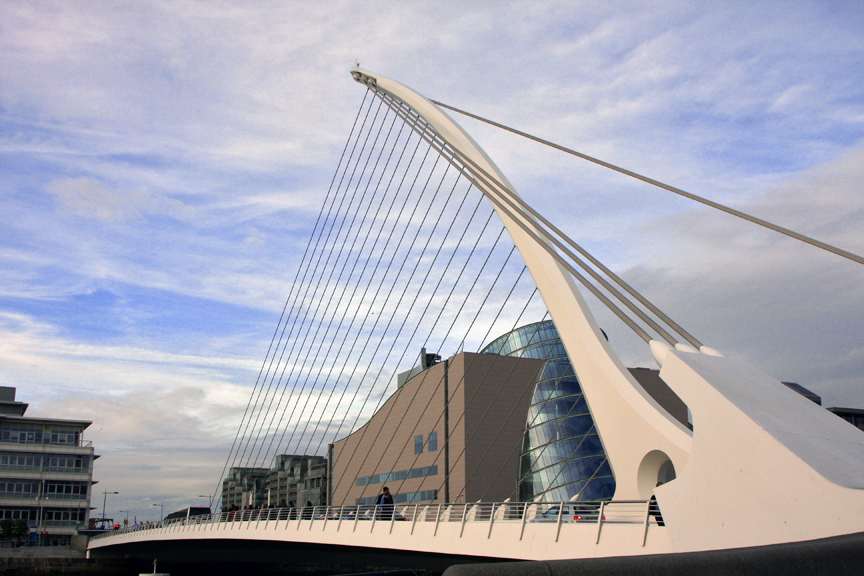
The Harp at Night - Samuel Beckett Bridge, Dublin

 
 Day Harp - Samuel Beckett Bridge, Dublin

Castle Through the Trees - Dunguire Castle, Ireland

O'Neill's Pub - Dublin, Ireland

Strength & Honor - St. Patrick's Cathedral, Dublin

At Prayer - St. Patrick's Cathedral, Dublin

Trinity College - Dublin

 The Cliffs - Cliffs of Moher, Ireland

 Castle on the Cliff - Cliffs of Moher, Ireland

Path Along Oblivion - Cliffs of Moher, Ireland

 Corcomroe Abbey - The Burren, Ireland

Tuesday, September 11, 2012

Gaining Perspective in Yosemite

Check out my latest monthly column about gaining perspective in Yosemite National Park.

Click here for story


Wherever-it-Takes-column-Gaining-perspective-in-Yosemite.jpg

Wednesday, September 5, 2012

Any Pub in Dublin


The Irish can’t stand it when you stereotype them. They know the world expects them to be Guinness-drenched, overly hospitable chatterboxes. It’s not that they take offense; they just humbly prefer you refrain from pointing out their best qualities and join in.
It doesn’t take much to feel at home in Dublin. That may be due to my Irish heritage, but more than likely not. It may be amplified a little, but certainly not exclusive. You know that annoying thing people say on March 17 every year, whether you’re in an Irish pub, a beach-side tiki bar or a techno-thumping night club: “Everyone’s Irish on St. Patty’s Day!”

That statement has much more credibility and truth to it no matter what day it is, when you’re actually in Ireland. The people there will encourage you to welcome others with open arms and chat the night away over too many pints of Guinness draught. And suddenly you’re one of them, feeling right at home embracing the Irish way.
The best way to do it? Just pick a pub. Any pub in Dublin is better than every bar in America, so you won’t go wrong with any one you choose. Or, if you’re like me, any eight you choose.
My Sunday in Dublin began quietly enough, meeting some friends for coffee and strolling around the grounds of the magnificent Trinity College. When we saw the line to see the Book of Kells stretching around the entire courtyard, our plans had to be changed. As much as I wanted to see the old library inside, I was not wasting a Dublin day in a two hour line.

Our group found itself at The Duke, a typical Irish pub serving typical food and typical beer. But typical is a compliment here because anything less or anything more would be unauthentic and out of place. In terms of time spent at pubs in Dublin, I tended to measure hours or minutes in pints. But there really can be no quantitative value assigned to a pint. The consumption rate depends on equal parts of the quality of the conversation and the heaviness of what’s inside that pint glass.

Our group - myself, my wife Danielle, our friends from London Katie and John, my college friend B.J. and a few of his family friends from home in the States – slipped into easy conversation barside at The Duke, asking the bartender about the rules for the upcoming Irish Football match and if he ever watched the NFL (no). Three pints later, Katie and John departed for the airport and the rest of us sauntered into the sunny Irish afternoon in search of a pub we’d all heard of, O’Neill’s.

After obtaining bad directions from a local (and yes, I believe this is required of every tourist in Ireland because we had been forewarned by several people, including a bus driver, that the Irish will never say they don’t know and just tell you regardless of accuracy), we spent a half hour walking in the wrong direction before turning around, retracing our steps and landing at O’Neill’s about 5 minutes from where we started.

If you can only visit one Irish pub in Dublin, snag a seat at O’Neill’s. It is not located in the famous Temple Bar area but it is on a back corner near an old church and a side street where tour buses pick up day passengers. One of O’Neill’s draws is the building itself. It is a pile of old, wooden rooms scattered on top, next to and around corners and crannies. On one trip to the bathroom we found an outside roofdeck and a set of stairs that led to a whole other hidden side of the pub. O’Neill’s seemingly just keeps going.

On this particular Sunday, the crowd was more locals than tourists due to the Irish Football semi-final championship playoff match between Dublin and Mayo. If you’ve never seen an Irish Football match, and I never had, think of a mix between soccer, rugby and felony assault. It was easy to see why the patrons at O’Neill’s clad in blue/white (Dublin) or green/red (Mayo) had more energy than a Red Sox v. Yankees playoff game. Despite being in Dublin, we found ourselves rooting for the underdog, Mayo. Dublin, we were told, is the equivalent of the New York Yankees, a powerhouse who won the championship last year but in this match was way behind early. Equal parts astounding athleticism and savage head shots, the match required several pints and caused quite a few oohs and ahs. As we left O’Neill’s, undeservingly satisfied with Mayo’s victory, I felt I could get into a sport like this.

From there we strolled through the famous and infamous Temple Bar area of the city. It is an area full of pubs and restaurants, a neighborhood for nightlife and revelry. We picked through the decorated and hopping Oliver St. John Gogarty’s, named after one of the city’s influential writers and difference-makers, before turning up to a pub called Buskars for a pint.

At this point we knew the road we were on and were willing to walk it. The only logical destination was the neighborhood’s namesake, the Temple Bar.

If O’Neill’s was a classic pub, serving classic food while cheering on a classic Irish sport, Temple Bar was its crazy, drunk uncle. The pub was jammed with people, both locals who watched the game and a deluge of tourists crammed around the musicians rattling off traditional Irish songs.

We found a tiny square of floor one layer removed from the bar and stood our ground. In a situation like this, when spillage and bumping is inevitable, the best thing to do is make friends with your neighbors. They did so for us. The two older gentlemen sitting on stools in front of us started chatting with BJ and we quickly engaged in conversation about Dublin v. Mayo (see, it helps to know what’s going on in the city you’re visiting) and anything else that came to mind. At one point my wife tried to take a picture of the massive array of bottles behind the bar, prompting the ribbing from one of the men that she was actually trying to snap a keepsake of the attractive male bartender. She assured me that wasn’t the case.

A few pints and few sing-alongs later, we left Temple Bar and a few friends behind us on our way to Finnegan’s nearby. At Finnegan’s we encountered a priest, a lawyer, a cop and a firefighter – no this is not the start to a joke. They were related, from America and of Irish heritage, of course. And coincidentally, one of them went to school with one of my wife’s best friends – Katie, who had left us a few hours before to fly home to London. The connection prompted a few pints, as it typically does, and the pints prompted a few comedic encounters with the bartender, as they typically do (we would see this group of Americans the next day on our day tour to the Cliffs of Moher, realizing the “small world” theory to its fullest).

Finnegan’s thinned the herd. Myself, my wife and B.J. were the only soldiers left standing. But the night was far from over. We decided to take an unknown route home and in doing so, stumbled, literally, on a bar B.J. had been looking for since his arrival on the Emerald Isle. The Stag’s Head, with its comedy club in the basement, made for the perfect last stop to our evening. We grabbed three seats at the bar, chatted up our bartender Neal and settled in for a few pints of Guinness. Neal convinced my wife, who had said she was done for the night, to have just one more, “wee pint.” Just cursed him, as she took the half glass from him.

“This is all your fault, Neal,” she said, along with a few choice and inappropriate curse words.

All Neal could do was laugh and say that she was not the first woman to say that to him, so he was alright with it.

We left Neal and the Stag’s Head out the door we entered, onto the cobbled back street intersection that acted more like a courtyard than traffic stop. As we departed the pub, we passed through a large crowd immediately outside the door. They were locals, some were sitting, some standing, all were singing, yelling, chatting and all were around the age of 60. I knew that because of the birthday cake on the overturned wooden barrel in the middle of the street.

“Happy birthday!” I yelled and got a raucous cheer in return.

“Want some cake?” And suddenly we were part of the family. I spent an hour talking to a man named Paul, or Peter, I’m not sure. It was late and as good as Guinness is, I don’t think it helps increase your memory. He lives in France, from Ireland of course, but sent seven years living in Somerville, Massachusetts. When he told me what street, I knew exactly where his house was. This small world thing was starting to scare me.

Regrettably, we departed from our newfound friends. With pubs shuttering their windows, it became apparent the night had finally come to an end. I had drank, hugged and chatted my way across greater Dublin, in a fashion some people would consider wasteful or crass. I consider it getting to know the city, the people, the culture and their delicious birthday cakes.

If you were counting, I referenced only seven pubs. There was an eighth somewhere in there. I’m sure of it. We counted on the walk home that night, wrote down “8” and fell asleep. But for the life of me, my wife or our friends, we cannot remember the name of the eighth pub. Quite frankly, it doesn’t matter. It simply reaffirms my belief that any pub in Ireland is better than any bar anywhere else.